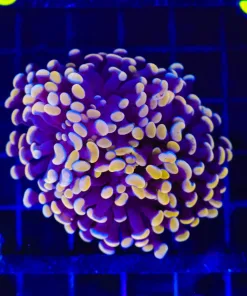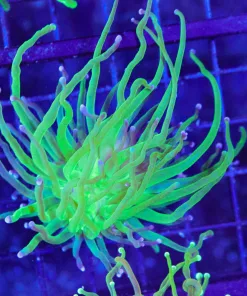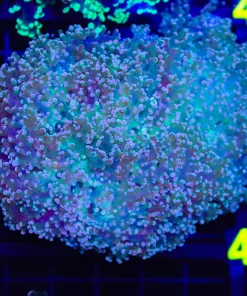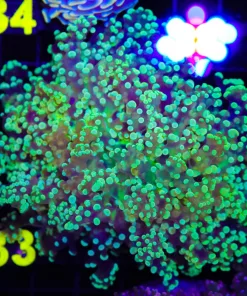



What Is Montipora Capricornis?
Montipora Capricornis, known universally in the hobby as Monticap, is one of the most iconic and widely kept SPS corals in the reef aquarium world. My name is March, I am the owner here at Fragbox and I have been growing and selling Monticap for over 16 years. It is the coral we point every aspiring SPS keeper toward first — genuinely easy to keep, incredibly fast growing, and available in a range of colour morphs that rival corals costing ten times as much. If you want to get into hard corals without throwing yourself in the deep end, Monticap is your answer.
Monticap Names and Varieties
Montipora Capricornis is the scientific name but in the hobby you will hear it called Monticap, Cap, Plating Monti, or Encrusting Monti. The trade name almost always refers to the colour morph — Red Monticap, Superman Monti, Sunset Monti, Purple Monticap, and so on. There are also non-capricornis encrusting and plating species that grow in essentially the same manner and are kept exactly the same way. At Fragbox we grow several colour morphs in our aquaculture facility here in Toronto and they are among our most popular corals year after year.
Appearance and Growth Form
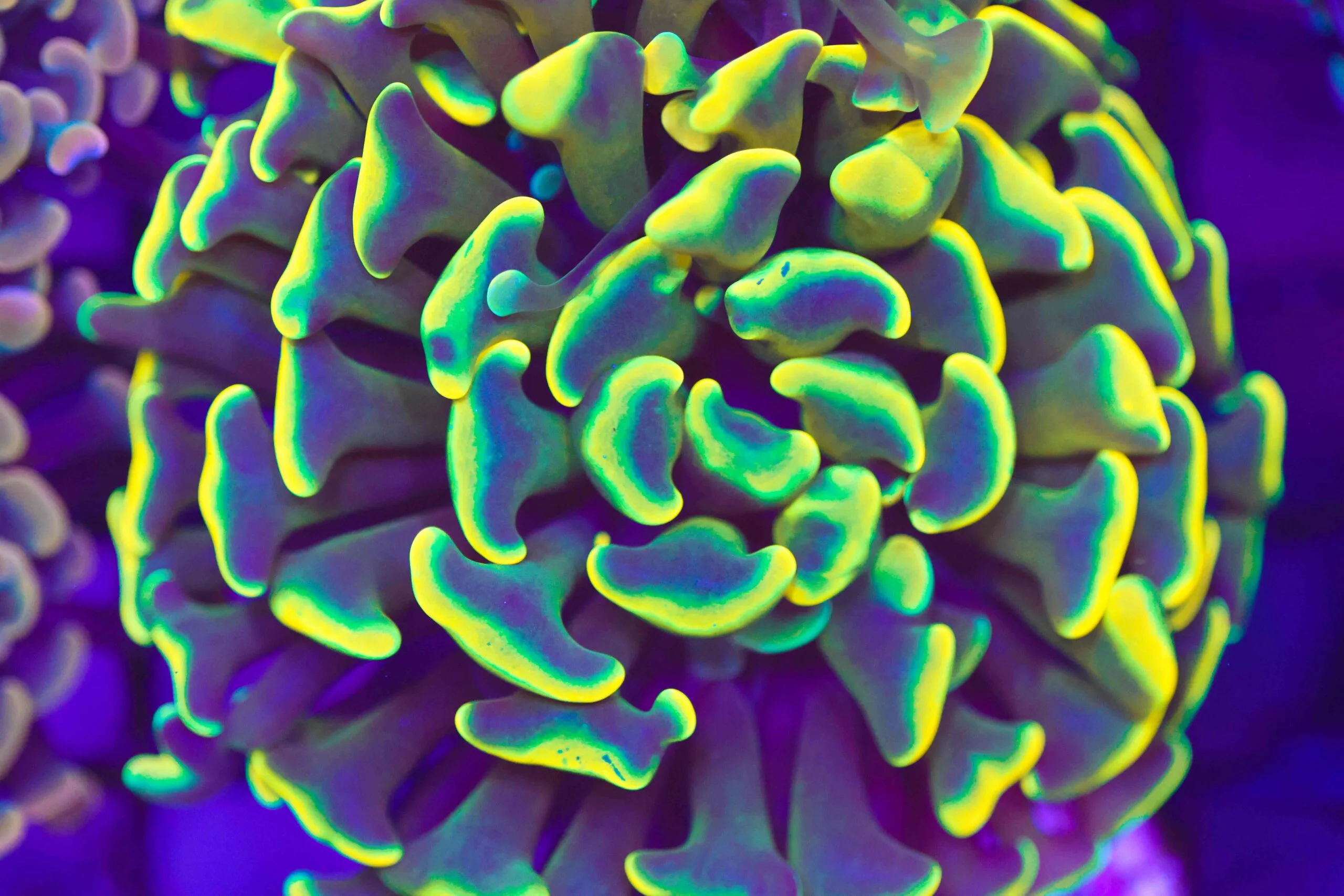
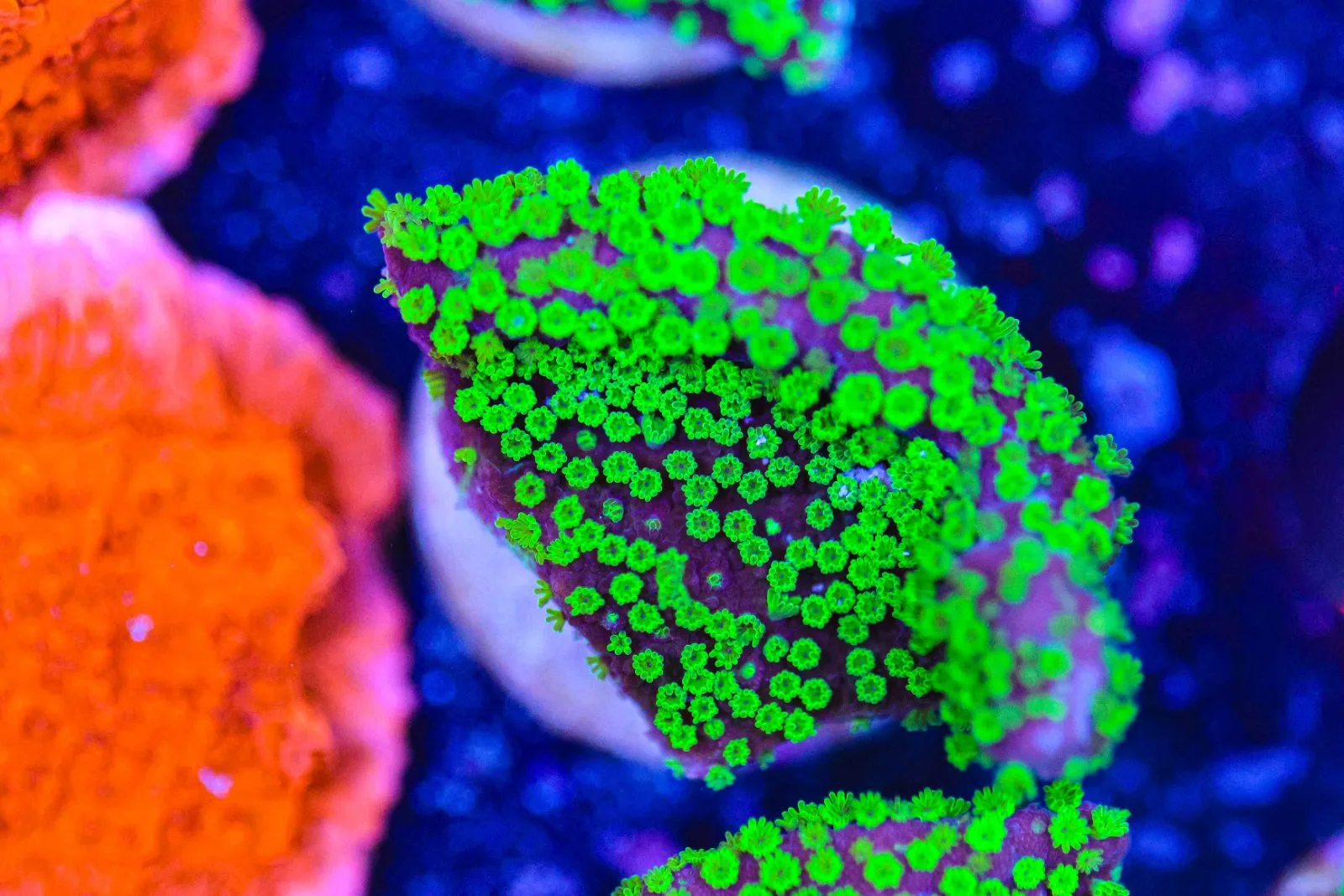
Monticap grows as a flat encrusting or plating coral that spreads laterally across rock work. Depending on placement and flow it can grow as a tight encrusting sheet hugging the rock surface, or it can extend outward as dramatic horizontal plates and shelves, sometimes curling upward at the edges. The surface is covered in tiny uniform corallites that give it a distinctive textured, almost velvet-like appearance. Under blue LED actinic lighting the colours are extraordinary — the Superman morph with its green polyps on a red body is one of the most visually striking corals in the hobby. Red, orange, purple, and green base colours are all available and each one looks completely different under white versus blue lighting.
Ease of Care
Monticap is without question the easiest SPS coral to keep. It does not demand the ultra-low-nutrient, ultra-stable water that Acropora requires. It tolerates slightly elevated nitrates and phosphates. It forgives the occasional parameter swing that would bleach more sensitive hard corals. It grows in a huge range of lighting conditions. If you have been successfully keeping soft corals and LPS for six months or more you are ready for Monticap. We have seen it thrive in tanks that we would not recommend for any other SPS coral. That said, like all hard corals it rewards good husbandry with dramatically better colour and growth — the better your tank the more stunning it becomes.
Monticap Lighting
Monticap does best under medium to high light. PAR of 150 to 250 is the sweet spot for most colour morphs. Under too little light the coral will brown out as it produces extra zooxanthellae to compensate. Under too much light it can pale out or bleach. The colour of your Monticap is one of the best real-time indicators of whether its lighting is dialled in — deep rich colour means it is happy, pale or washed out means too much light, brown means too little. We place our Monticap frags in the middle to upper sections of our grow-out system under Radion LEDs. One thing worth noting is that Monticap grows as a flat plate so placement angle matters — a frag placed horizontally will spread as a plate, while one placed on a vertical rock face will grow as an encrusting sheet. Both are beautiful, just different.
Proper Monticap Flow
Monticap appreciates good indirect flow. Because it grows as a flat plate it can trap detritus on its surface if flow is too low, which leads to tissue recession. You want enough water movement to keep the surface clean and the polyps in motion but not so much direct blasting that the polyps stay retracted. Random indirect flow from a wavemaker is ideal. In our farm we run moderate flow across our Monticap beds and it keeps the surface clean and the polyps extended. If you notice your Monticap accumulating a layer of detritus or film on its surface, increase the flow before anything else.
Growth Rate
Monticap is one of the fastest growing hard corals in the hobby and this is one of its most exciting qualities. A frag the size of a coin can cover a dinner plate sized area of rock within a year in a healthy tank. It will grow over and onto anything it contacts — neighbouring rock, the glass, equipment, and other corals. Plan ahead when placing Monticap. Give it a dedicated rock with room to spread, or place it somewhere you do not mind it encrusting aggressively. The good news is that fast growth means easy fragging — you can regularly trim back the edges of a growing colony and turn the trimmings into new frags. We produce an enormous volume of Monticap frags from our aquaculture colonies in Toronto and it is one of the most self-sustaining corals we grow.
Pests — The Montipora Eating Nudibranch
There is one pest you absolutely need to know about before keeping any Montipora — the Montipora eating nudibranch. This is a small cream or white coloured nudibranch that feeds exclusively on Montipora tissue. It is extremely difficult to spot because it matches the colour and texture of the coral perfectly. Its eggs are laid flat against the coral surface and are equally well camouflaged. A single undetected nudibranch can cause rapid tissue recession on a Monticap colony. The best defence is a thorough coral dip before any Montipora enters your tank, and regular close inspection of your colonies particularly around the base and on the underside where they prefer to hide. Six-line wrasses are excellent hunters of these nudibranchs and are highly recommended in any Montipora-heavy system. If you spot one, remove it manually and dip the affected coral immediately.
Attaching Monticap To Your Rock
Monticap can be glued directly to rock with reef safe coral glue. Frags should be placed flat against the rock surface you want them to spread across — the flatter the contact area the better. The coral will encrust over the glue and attach firmly within a couple of weeks, after which it will begin spreading outward from the frag. Because Monticap grows as a plate it is worth thinking about the angle and position carefully before gluing. A flat rock face or a horizontal ledge will let it spread naturally in its most impressive plate form. You can find reef safe coral glue here.
Monticap Feeding
Like all SPS corals Monticap is photosynthetic and meets the majority of its energy needs through light. It does not need to be target fed. That said it will grow faster in a tank that is not completely stripped of nutrients — a small amount of dissolved organic matter and zooplankton in the water column benefits Monticap. We do not target feed our Monticap in the farm. Stable parameters, good lighting, and a healthy nutrient cycle in the tank are all it needs to thrive and grow aggressively.
Water Chemistry
As a hard coral Monticap builds a calcium carbonate skeleton and does consume calcium and alkalinity. Stable parameters matter more here than with soft corals or LPS. We recommend alkalinity at 7.7 to 8.3, calcium at 420 to 450ppm, and magnesium at 1350 to 1450ppm. Consistency is more important than hitting exact numbers — a tank that holds stable at Alk 7.7 will grow far better Monticap than one that swings between 7 and 9. We dose daily with Atoll in our farm and the improvement in colour and growth rate compared to manual water changes alone is significant. Nitrates around 5 to 10ppm and phosphates around 0.05 to 0.1ppm seem to produce the richest colours in our experience.
Propagation
Monticap is one of the easiest corals to propagate and we frag thousands of pieces every year at our facility in Toronto. To frag Monticap you simply snap or cut a piece from the edge of a growing colony and glue it flat to a new rock or frag plug. The edge of the frag will begin encrusting within days and spreading within weeks. Because we aquaculture the majority of our Monticap in house you are getting a hardened, tank-raised coral that is already adapted to aquarium conditions when you order from Fragbox — not a wild caught coral that needs weeks of adjustment.
Dipping Monticap
Always dip Monticap before adding it to your tank — this is especially important because of the Montipora eating nudibranch described above. A good coral dip like coral rx or two little fishies revive will kill or dislodge nudibranchs and their eggs. Dip for the full recommended time and inspect the dip water carefully for any small cream coloured slugs that may have been knocked loose. Check out this video on how to dip corals.