


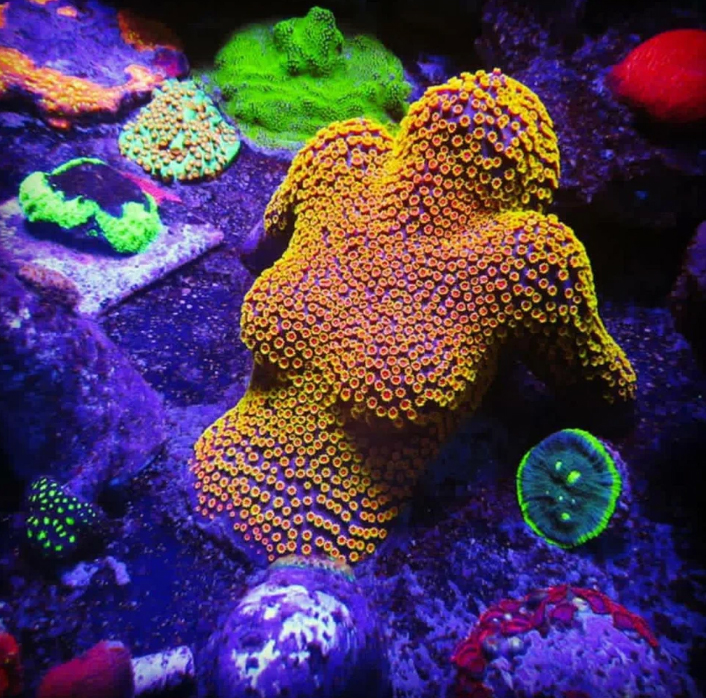
What Is Cyphastrea Coral?
Cyphastrea is one of the most underappreciated LPS corals in the reef aquarium hobby. My name is March, I am the owner here at Fragbox and I have been keeping and selling Cyphastrea for over 16 years. It does not get the same attention as Hammer Corals or Acans but in my opinion it deserves far more recognition. It is incredibly hardy, grows fast, comes in an almost unlimited range of colour variations, and looks absolutely electric under blue LED actinic lighting. If you are looking for a low maintenance LPS coral that delivers serious visual impact, Cyphastrea should be at the top of your list.
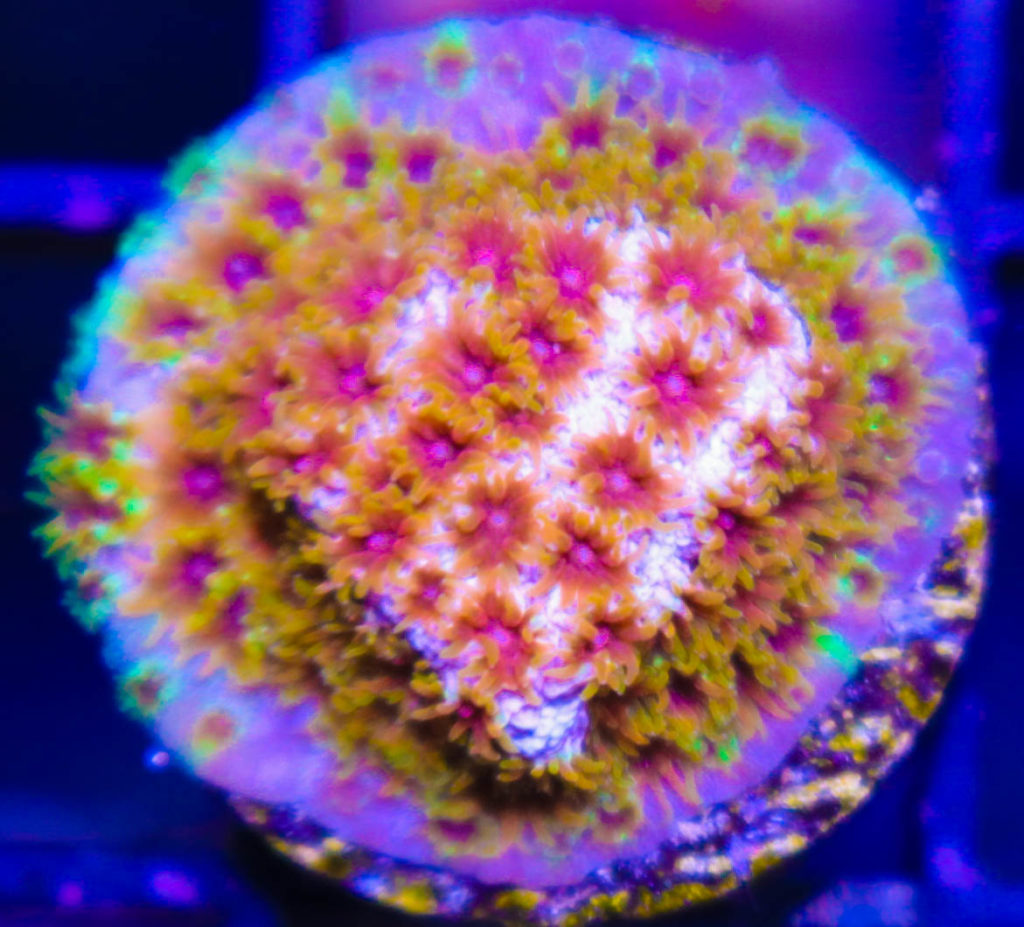
Cyphastrea Names and Varieties
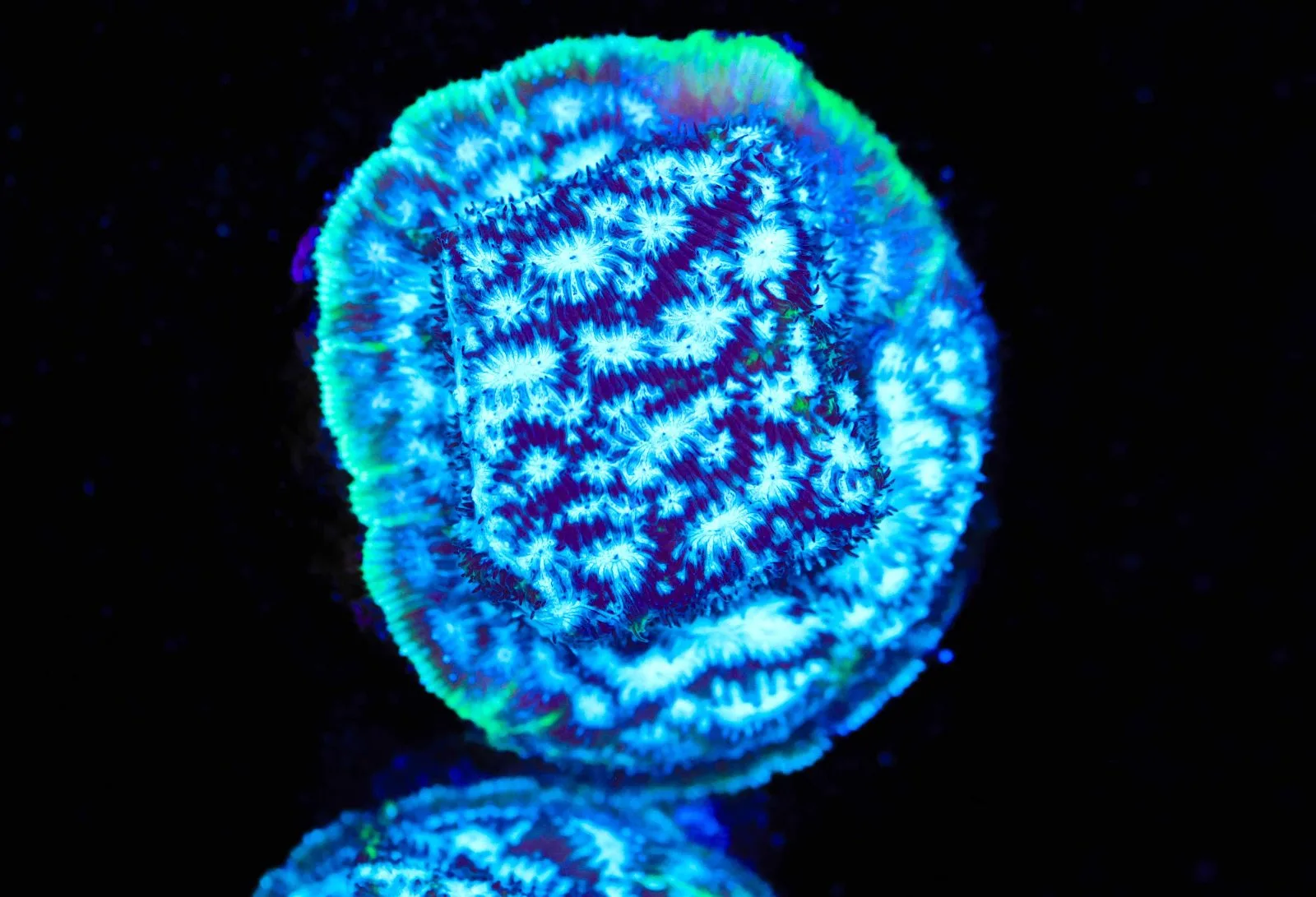
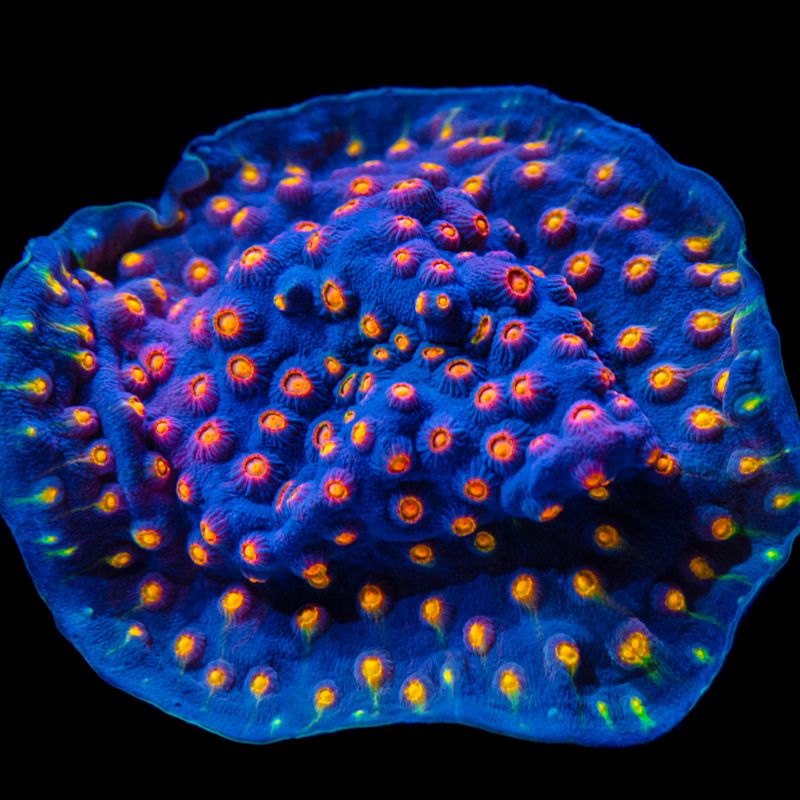
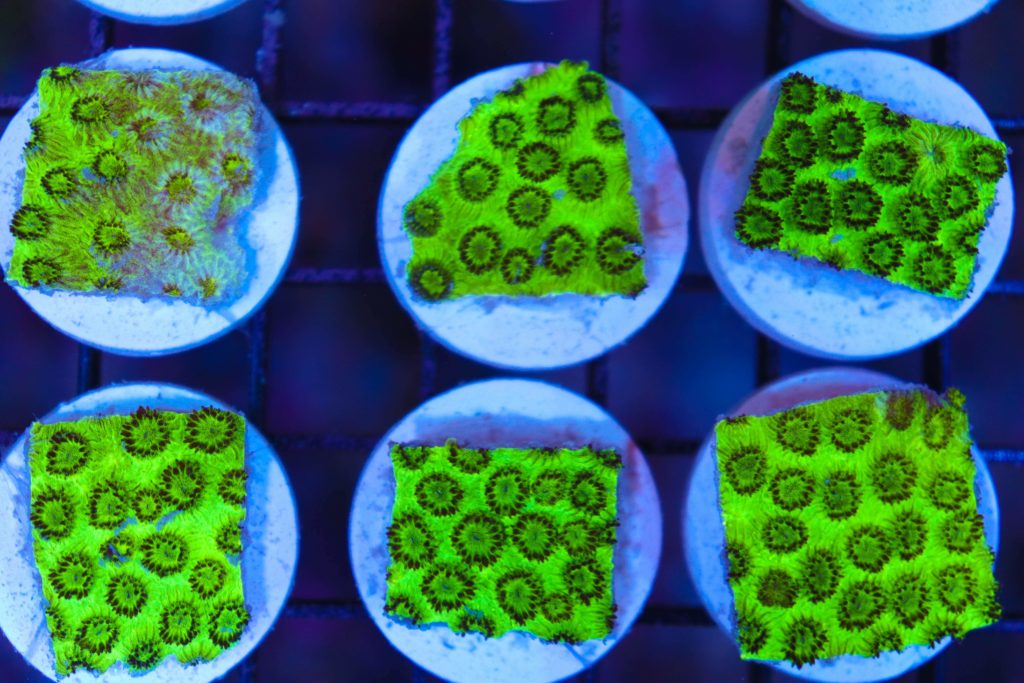
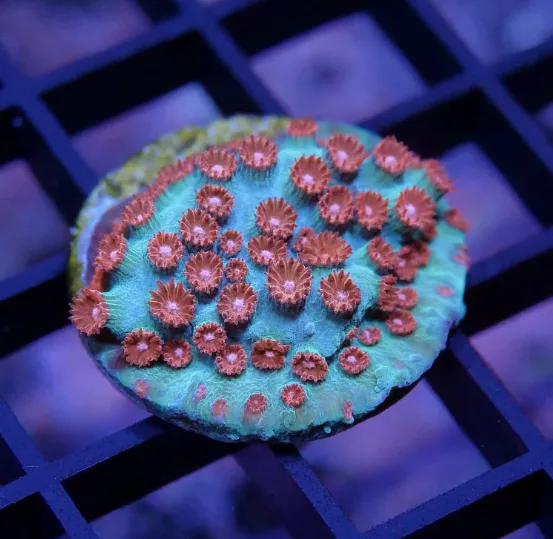
Cyphastrea belongs to the family Merulinidae and is found across the Indo-Pacific including Australia, Vietnam, and the Caribbean. In the hobby it goes simply by the name Cyphastrea. Trade names refer to specific colour morphs — Party Crasher Cyphastrea, Meteor Shower Cyphastrea, and Bling Bling Cyphastrea are among the most popular and sought after varieties. The colour combinations are extraordinary — neon greens, electric blues, vivid reds, oranges, and multicolour varieties that seem to glow under actinic lighting. Collecting different Cyphastrea colour morphs is genuinely addictive and many reefers dedicate whole sections of their tank to building a Cyphastrea garden.
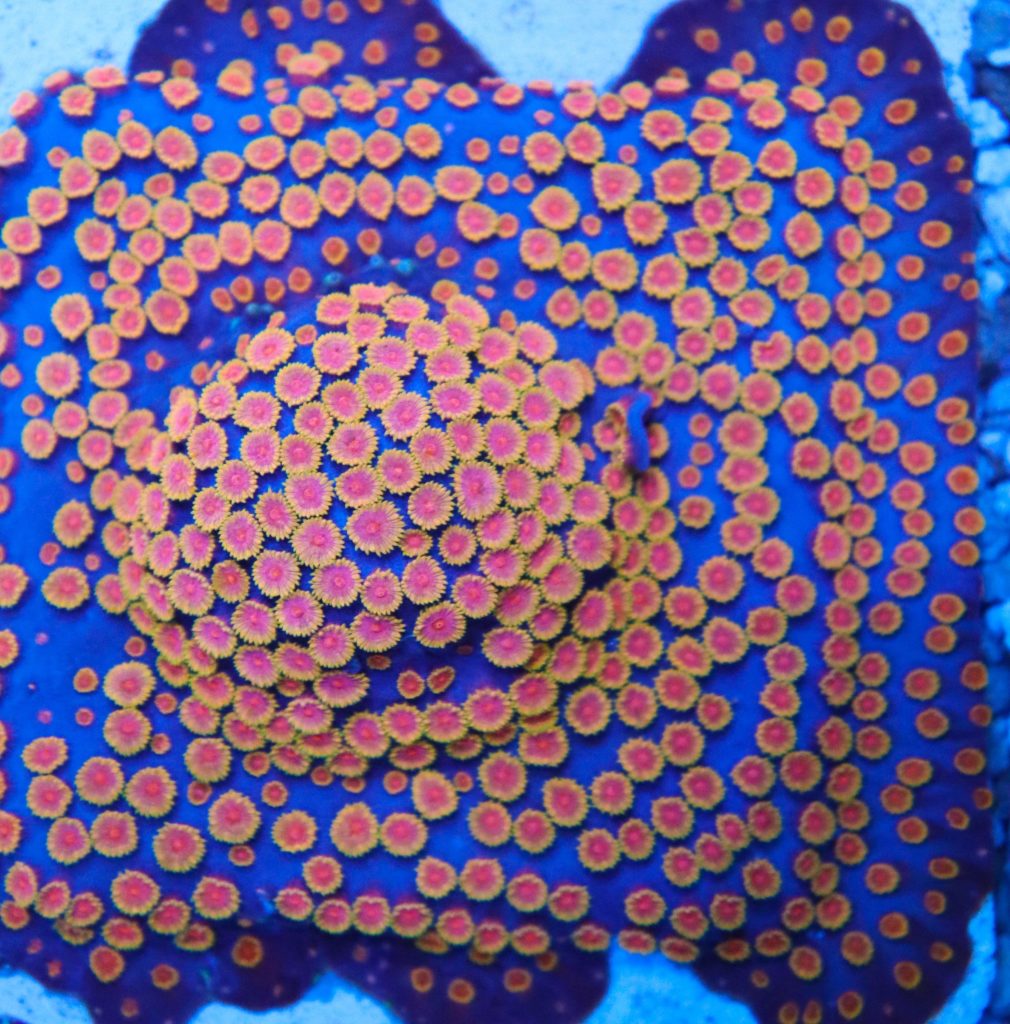
Appearance
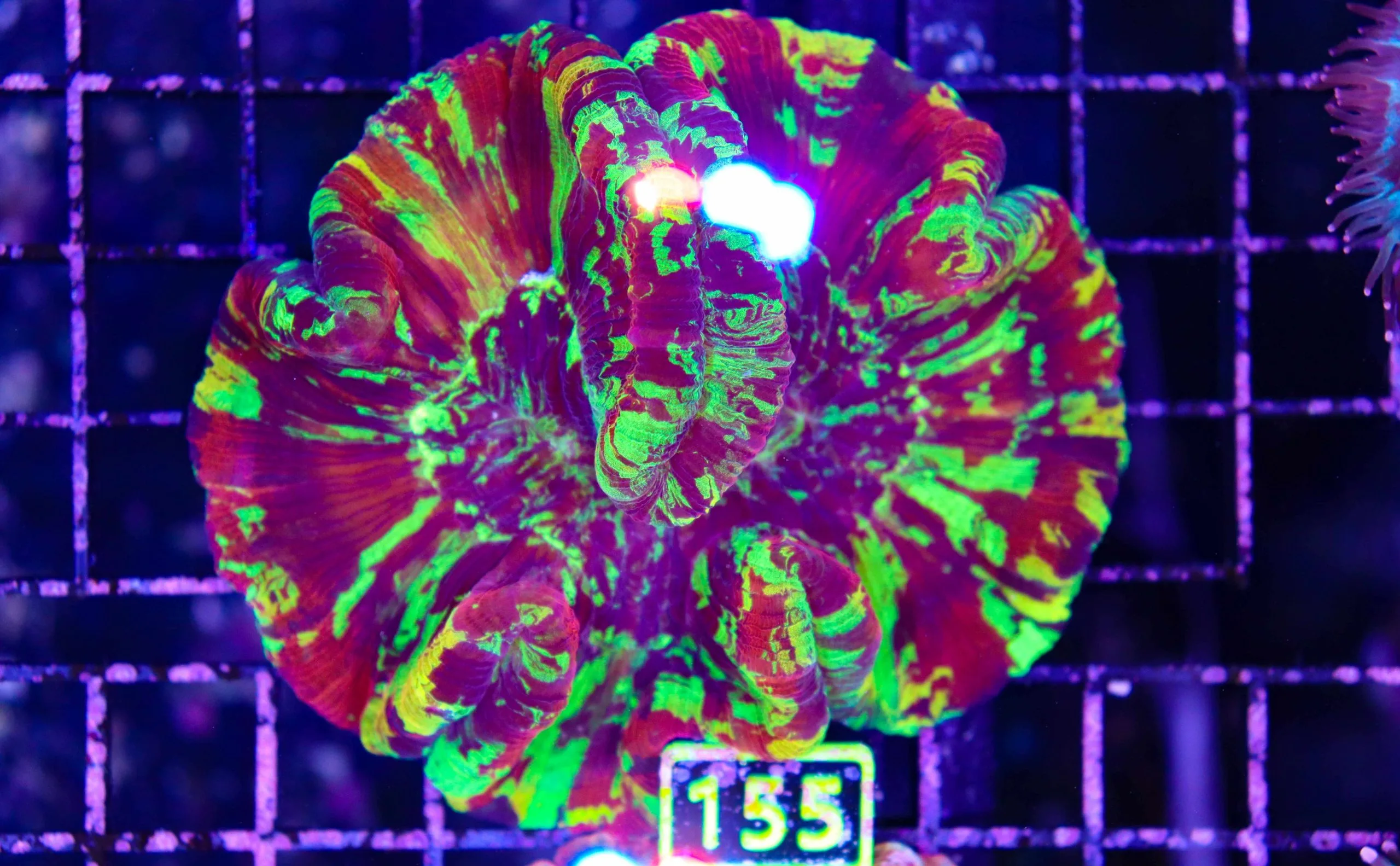
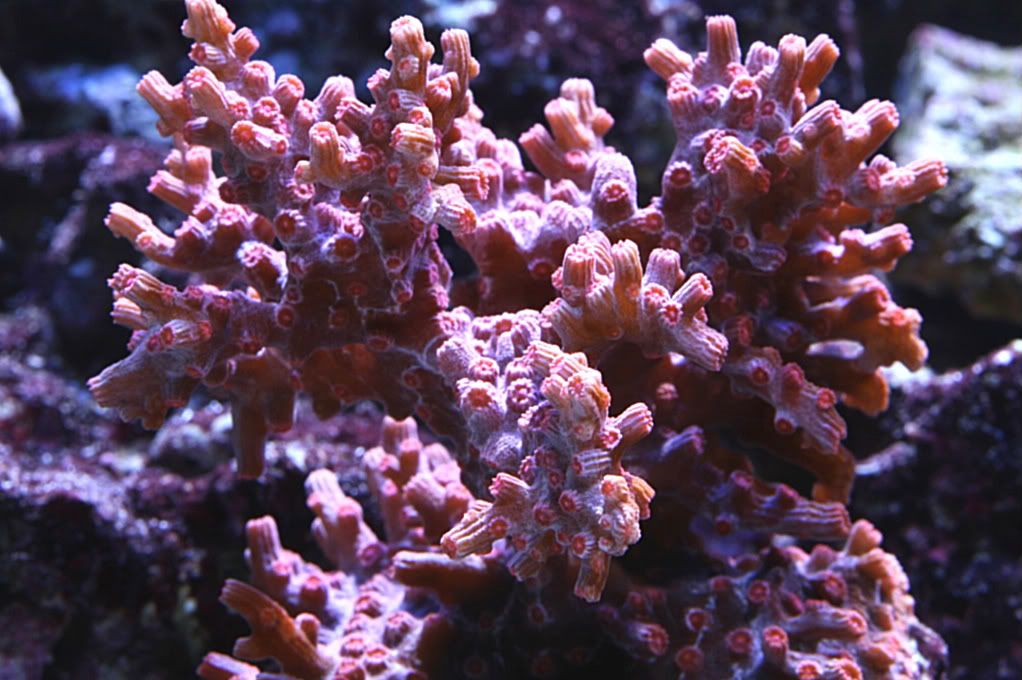
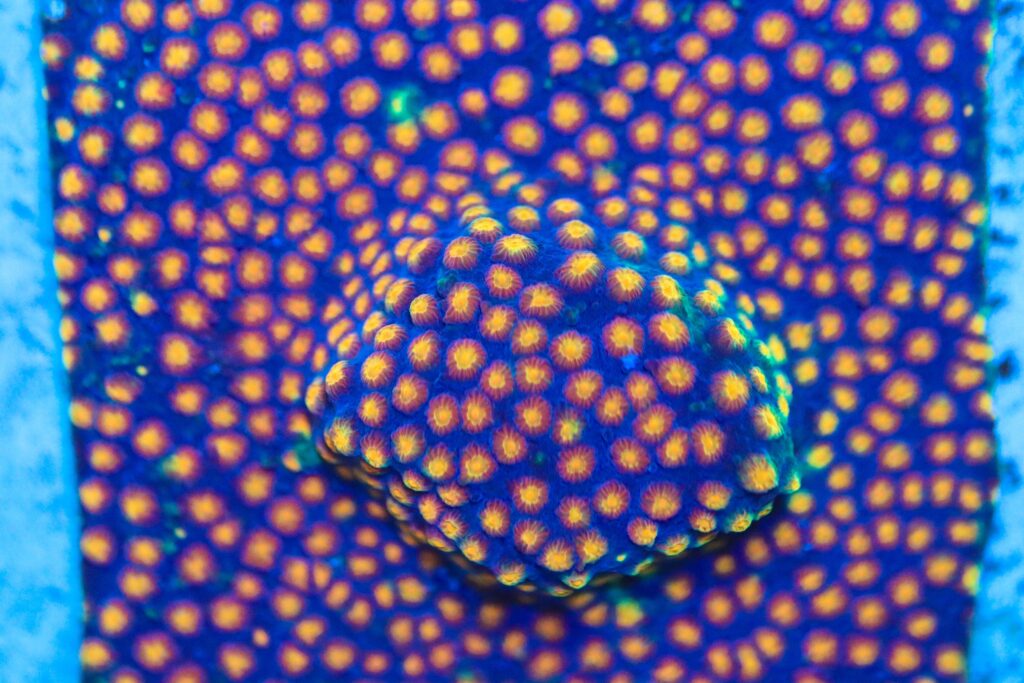
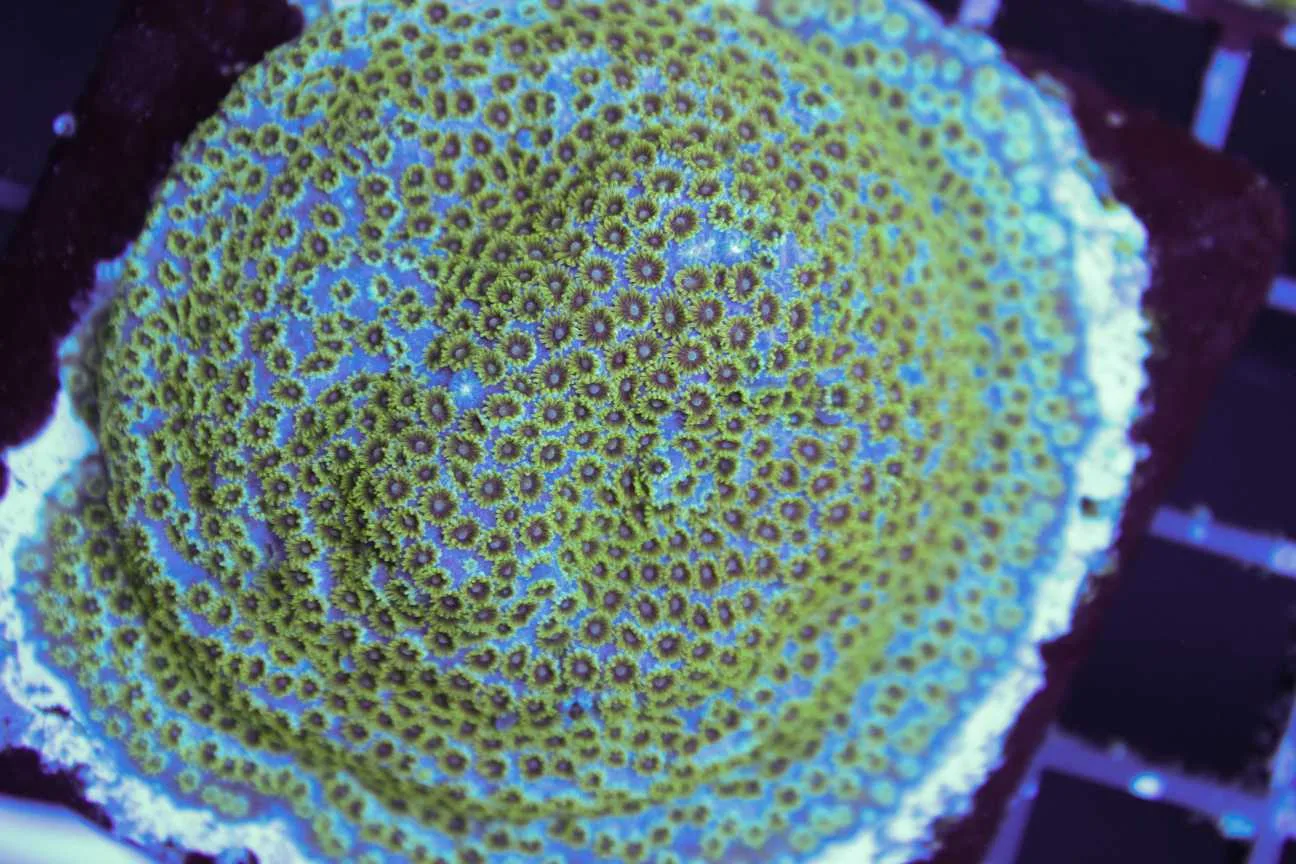
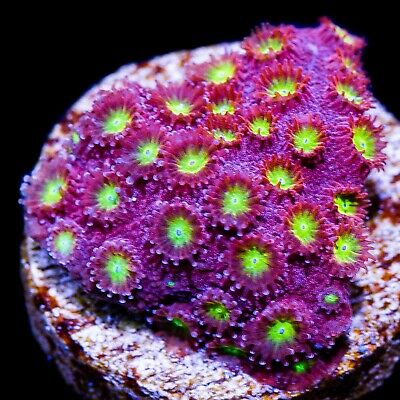
Cyphastrea is almost entirely an encrusting coral — it grows as a flat sheet that spreads across rock and substrate, building a hard calcium carbonate skeleton as it goes. The surface is covered in densely packed tiny corallites that give it a distinctive spotted or dotted texture, making it one of the most immediately recognisable corals in the hobby. There is a rare branching variety of Cyphastrea that grows upward rather than spreading flat — this form is slower growing and almost always comes in red, and is considered a collector’s piece. The colours of Cyphastrea are where it truly shines — particularly under blue LED actinic lighting where the neons and fluorescents come fully alive in a way that is hard to describe until you see it in person.
Ease of Care
Cyphastrea is one of the hardiest LPS corals you can keep. It tolerates a wider range of conditions than most hard corals and is genuinely forgiving of the kind of parameter swings and lighting inconsistencies that would stress more demanding species. It does not need to be fed to grow — it is fully photosynthetic and meets its energy needs from light alone. It does not have an aggressive feeding response or sweeper tentacles that require careful placement management. We have had Cyphastrea thrive in tanks that we would not recommend for most other LPS corals. If you want a hard coral that rewards you with fast growth and stunning colour without demanding constant attention, Cyphastrea delivers.
Cyphastrea Lighting
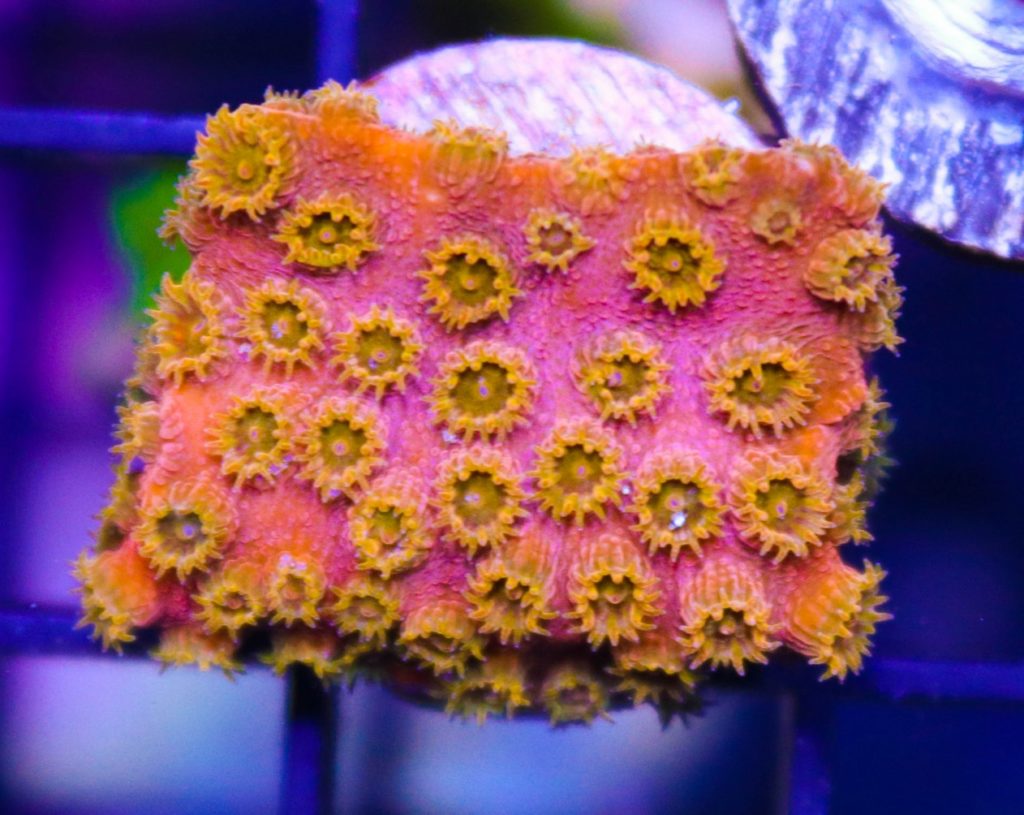
Cyphastrea prefers lower to medium light conditions. PAR of around 100 is the sweet spot — enough light to fuel healthy photosynthesis and bring out the best colour without bleaching the coral. Under too much intense light Cyphastrea can pale out and lose its vivid colouration. Under strong blue LED actinic lighting at the right intensity the colours of Cyphastrea are absolutely extraordinary — the neons and fluorescents in varieties like Party Crasher or Meteor Shower glow in a way that makes them look almost unreal. We place our Cyphastrea in the lower to middle sections of our grow-out systems and the results speak for themselves.
Proper Cyphastrea Flow
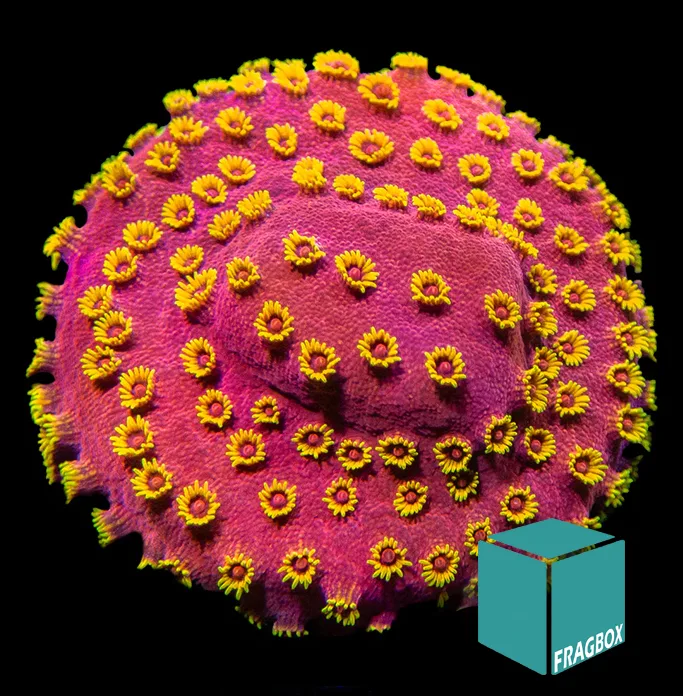
Medium indirect flow works best for Cyphastrea. Because it grows as a flat encrusting sheet it can accumulate detritus on its surface if flow is too low — and detritus buildup is one of the main causes of tissue recession in encrusting corals. You want enough water movement to keep the surface clean but not so much direct blasting that the coral is stressed. Random flow from a wavemaker is ideal. If you notice your Cyphastrea developing a layer of film or sediment on its surface, increase the flow before making any other changes.
Cyphastrea Growth
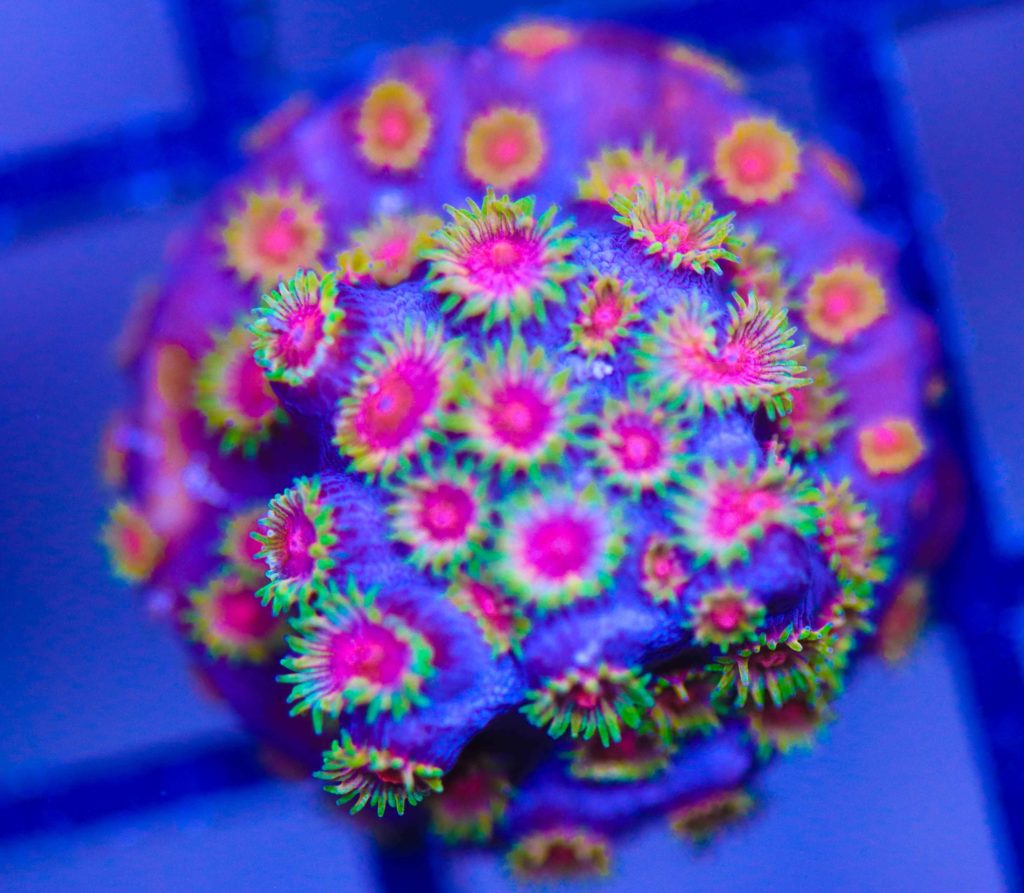
Cyphastrea grows super fast for most reefers and this is one of its most exciting qualities. It will spread steadily outward from a frag across the rock surface and given time and space can cover impressive areas. It does not have any sting of its own but it can grow into neighbouring corals and be stung by them in return — so plan your placement with the Cyphastrea’s growth trajectory in mind. One of our best tips is to place Cyphastrea on rocks that are easy to remove from the tank. When the colony grows large you can simply pull the rock out, snap off sections to frag, and return it without disturbing your main aquascape. This approach makes managing a fast-growing Cyphastrea colony much simpler.
An amazing example of Party Crasher Cyphastrea
Compatibility
Cyphastrea has no sting of its own and is a peaceful coral from an offensive standpoint. However because it is an aggressive encrusting grower it will grow into neighbouring corals if they are too close, and those corals may sting the Cyphastrea as it encroaches. Give Cyphastrea room to spread and keep aggressive stinging corals like Hammer, Torch, and Duncan at a safe distance. Within a Cyphastrea collection you can place different colour morphs close together — they will form a growth line where they meet but generally coexist without seriously harming each other, creating a beautiful mosaic of colours across a single rock face.
Cyphastrea Feeding
Cyphastrea is fully photosynthetic and does not need to be fed to survive and grow well. It meets all of its energy requirements from light. Unlike some LPS corals that benefit dramatically from regular target feeding, Cyphastrea grows vigorously in our farm with no supplemental feeding whatsoever. That said it will passively benefit from any broadcast feeding you do for other corals in the tank. If you want to push growth even faster, occasional feeding with a fine particle food is not harmful — but it is genuinely not necessary.
Water Chemistry
As a hard coral Cyphastrea builds a calcium carbonate skeleton and does consume calcium and alkalinity. We recommend keeping alkalinity at 7.7 to 8.3, calcium at 420 to 450ppm, and magnesium at 1350 to 1450ppm. Cyphastrea is more tolerant of parameter swings than most hard corals but stability still produces better results. It is also more tolerant of elevated nutrients than many LPS corals — slightly elevated nitrates and phosphates do not stress it the way they would Acropora or other sensitive SPS corals.
Propagation
Cyphastrea is one of the easiest hard corals to propagate. To frag it simply snap or cut a piece from the edge of a growing colony with bone cutters or a frag saw and glue it flat to a new rock or frag plug. The frag will begin encrusting and spreading within days. Because of the fast growth rate there is a ready supply of material to work with and the mother colony recovers quickly from fragging. We produce a large volume of Cyphastrea frags from our aquaculture colonies in Toronto and it is one of the most self-sustaining hard corals we grow.
Dipping Cyphastrea
Always dip Cyphastrea before adding it to your tank. A coral dip such as coral rx or two little fishies revive applied for the full recommended time will remove any unwanted hitchhikers. Check out this video on how to dip corals.
![Wysiwyg Yuma Coral [F22]](https://fragbox.ca/wp-content/uploads/2026/08/F22-1-247x296.webp)
![Wysiwyg Time Twister Acan [F10]](https://fragbox.ca/wp-content/uploads/2026/08/F10-1-247x296.webp)
![Wysiwyg Time Twiser Discosoma Mushroom | Very Unique Color / Pattern [F25]](https://fragbox.ca/wp-content/uploads/2026/09/F25-247x296.webp)
![Wysiwyg Purple Acan Bi Color Acan Frag [F1]](https://fragbox.ca/wp-content/uploads/2026/09/F1-247x296.webp)
![Wysiwyg Ricordea Florida Mushroom [F31]](https://fragbox.ca/wp-content/uploads/2026/09/F31-247x296.webp)
![Wysiwyg Small Yuma Coral Frag [F32]](https://fragbox.ca/wp-content/uploads/2026/09/F32-247x296.webp)