



What Is Pineapple Tree Coral?
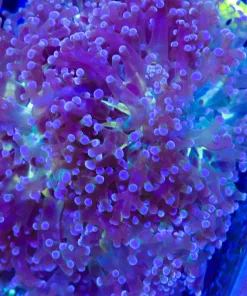
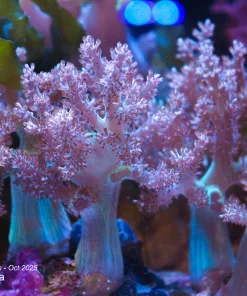
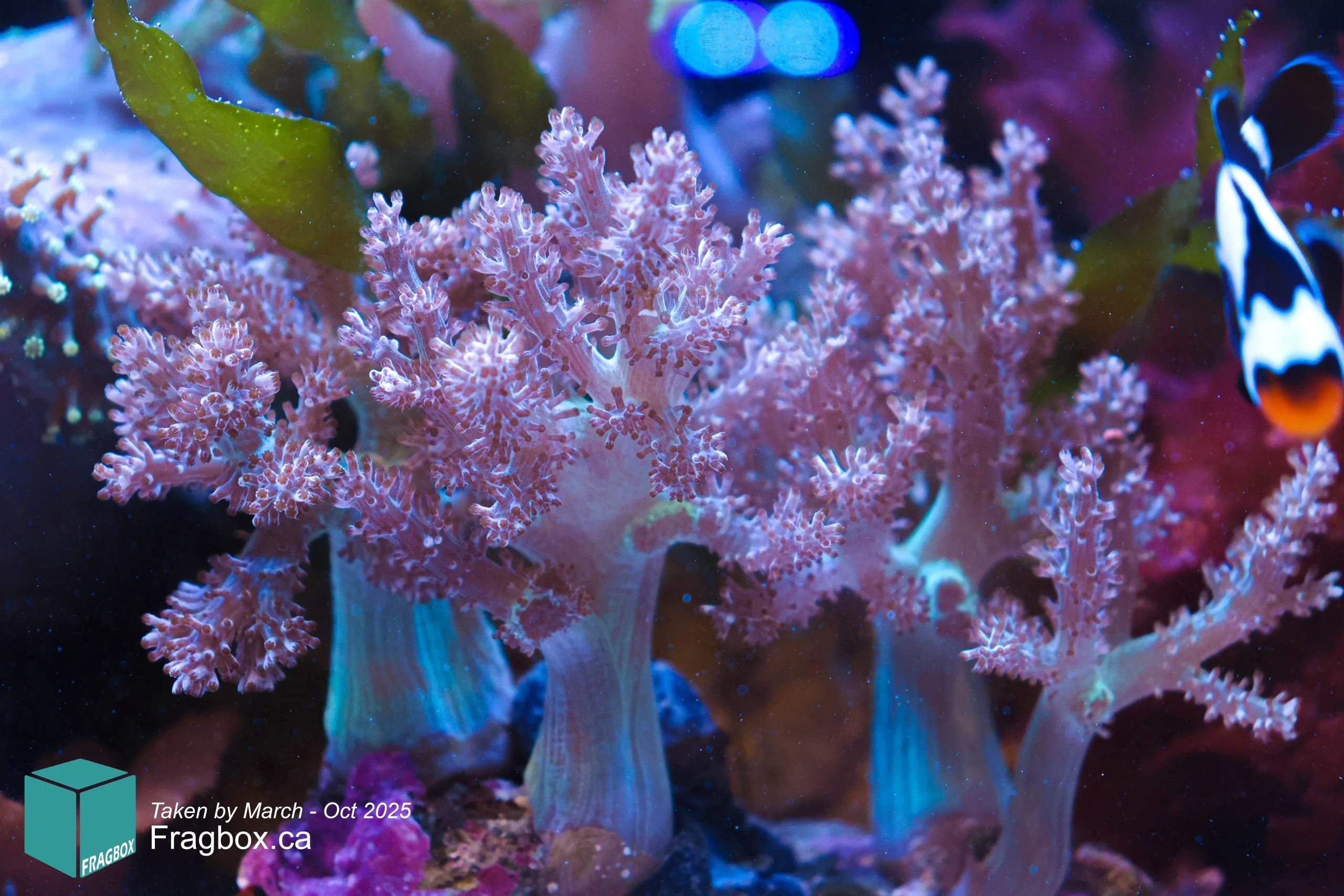
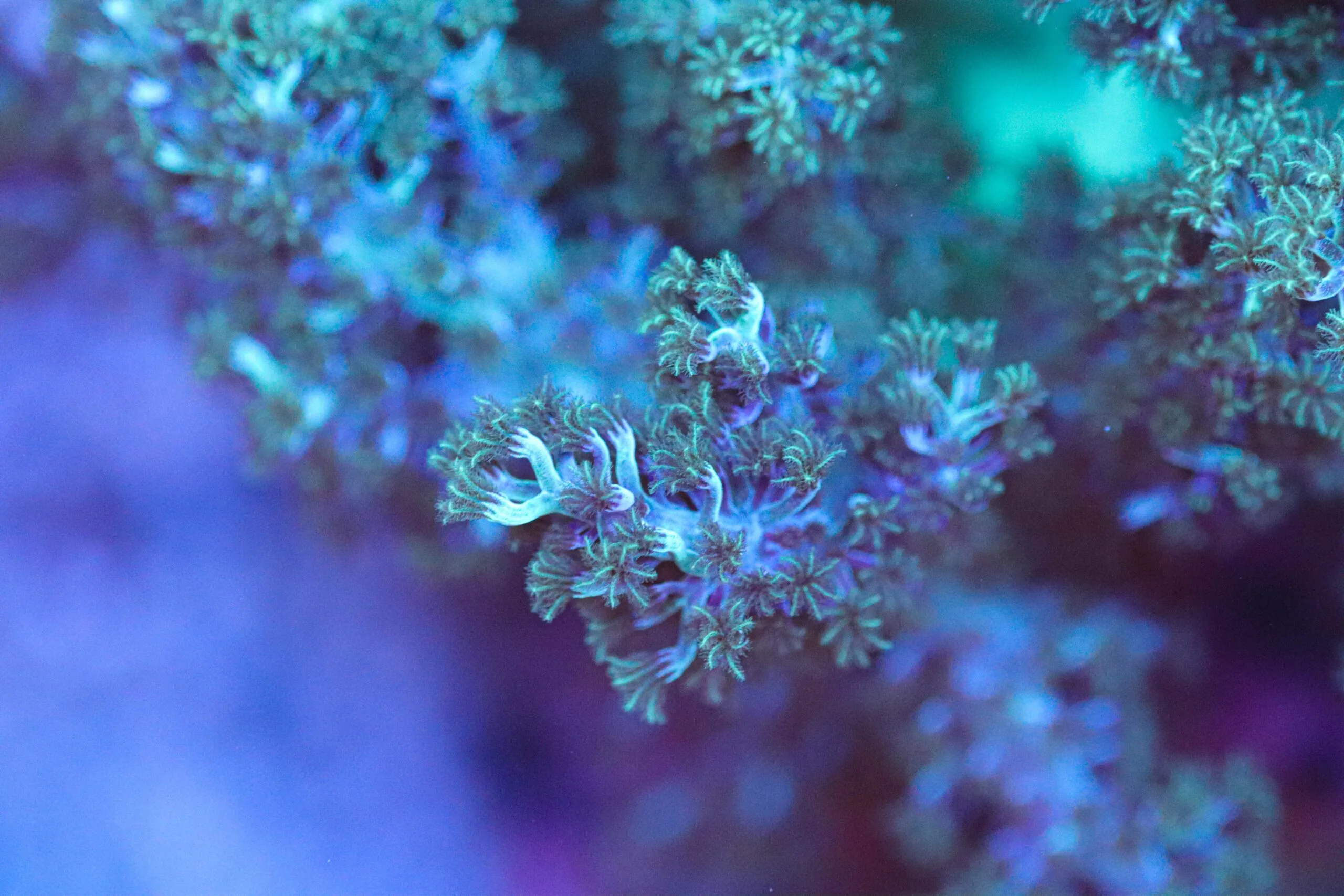
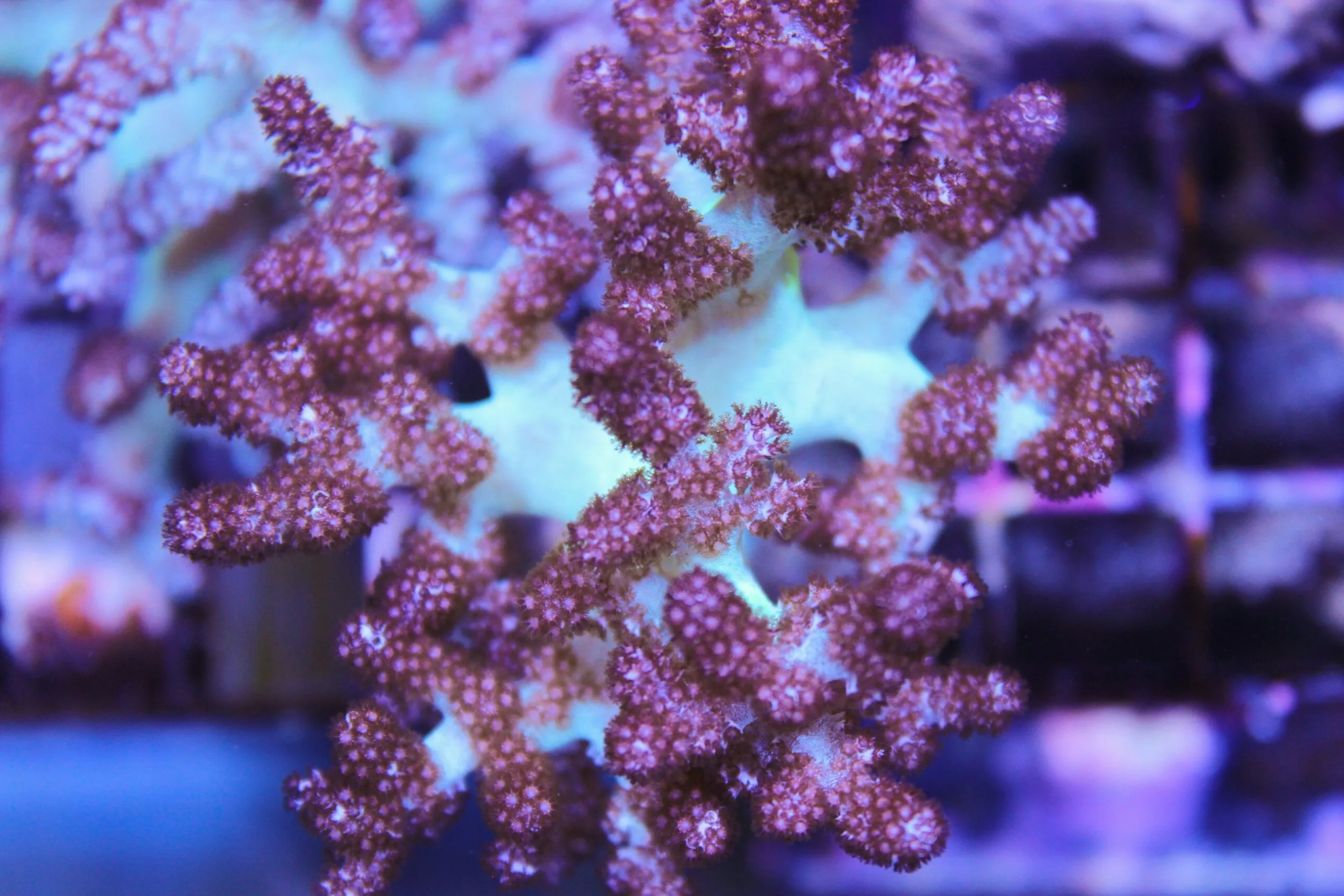
Pineapple Tree Coral is one of the most unique and visually distinctive soft corals available in the reef aquarium hobby. My name is March, I am the owner here at Fragbox and I have been growing and selling Pineapple Tree Corals for over 16 years. This coral gets its name from its unmistakable appearance — a thick central trunk with branches that terminate in dense clusters of polyps that look remarkably like a miniature pineapple. The Blue Pineapple Tree is our most popular colour morph and under blue LED actinic lighting it takes on a stunning blue to purple iridescence that is unlike anything else in a soft coral reef.
Pineapple Tree Coral Names
Pineapple Tree Coral belongs to the genus Capnella and is closely related to Kenya Tree Coral, which is also a Capnella species. You will sometimes hear it called Pineapple Coral, Cauliflower Soft Coral, or simply Tree Coral in the hobby. The trade name Pineapple Tree refers specifically to the growth form — a prominent central stalk with branching arms that end in tightly clustered polyp heads. The Blue variety is the most sought after colour morph and is what we grow and sell at Fragbox. Unlike Kenya Tree which tends to have more spread out, feathery individual polyps, the Pineapple Tree has denser, more compact polyp clusters that give it that distinctive pineapple-like texture.
Appearance
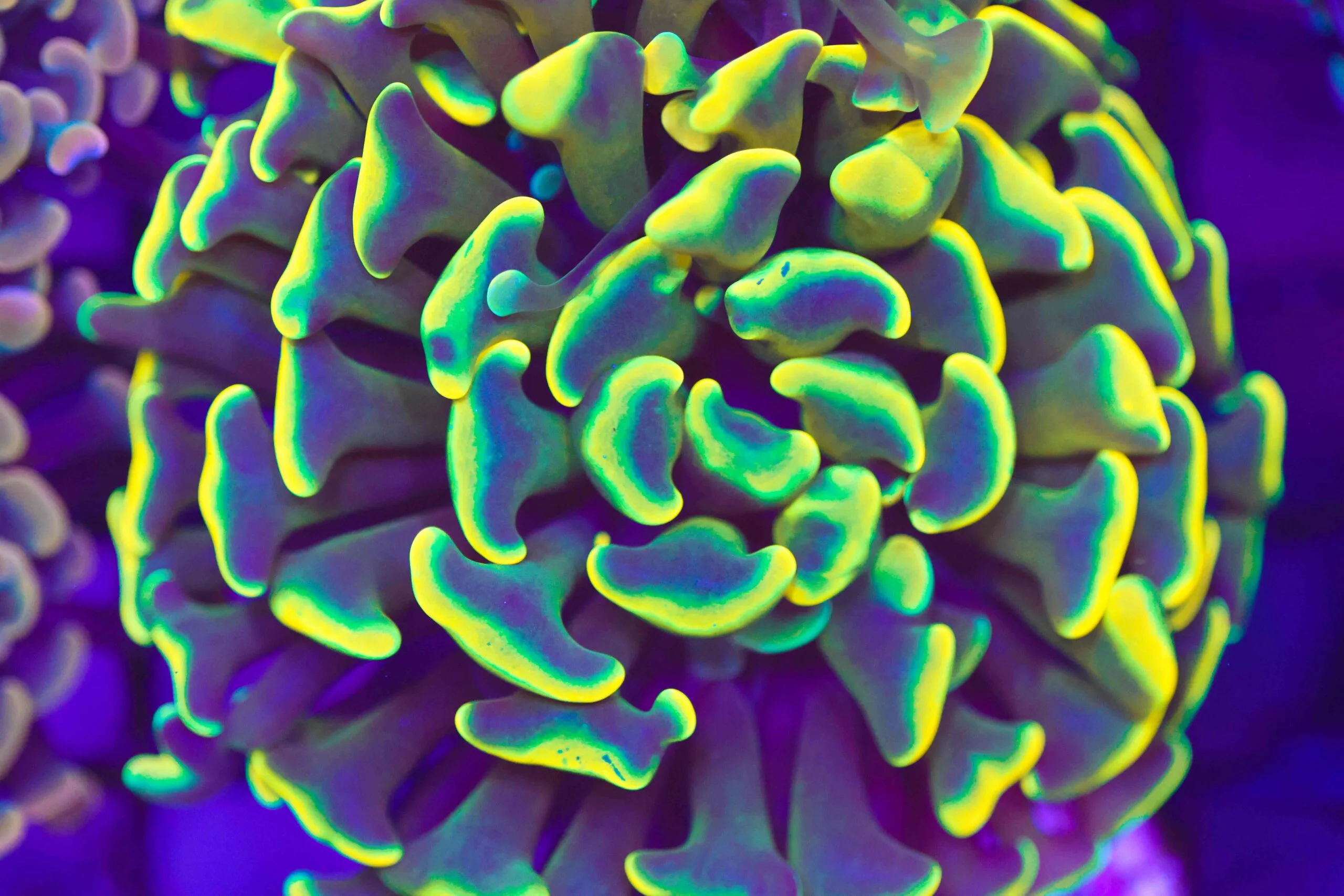
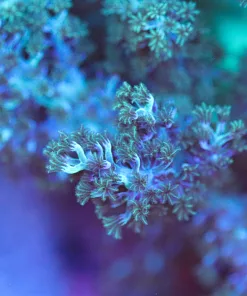
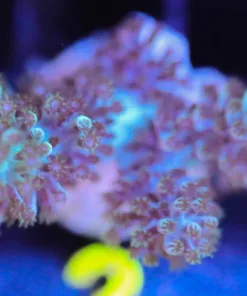
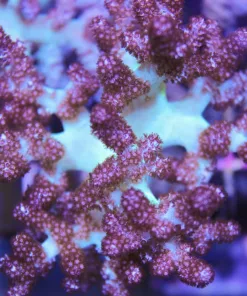
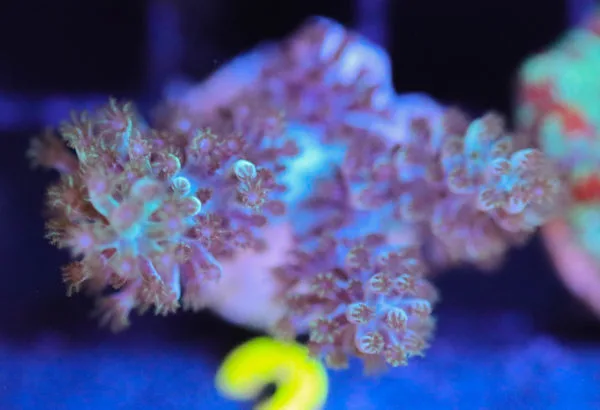
The Pineapple Tree Coral grows a substantial, fleshy central trunk that branches upward and outward into multiple arms. Each arm ends in a dense, rounded cluster of polyps that extends and retracts as one unit, creating the characteristic pineapple appearance when fully open. The blue colour morph appears tan to beige under white light but transforms into a vivid blue-purple under blue actinic LED lighting — the effect in a reef tank is genuinely spectacular. Colonies can grow quite large over time, developing into impressive tree-like structures that become a centrepiece of any soft coral reef. The polyps sway gently in the flow and when fully extended the texture of the polyp clusters is soft and almost furry in appearance.
Ease of Care
Pineapple Tree Coral is beginner friendly in every way. It is photosynthetic, requires no feeding, tolerates a wide range of lighting and flow conditions, and is completely peaceful with no sting. It does not demand stable calcium or alkalinity levels since it builds no hard skeleton. It is one of those corals that will thrive in a newer tank that is not yet fully dialled in, making it an excellent choice for reefers who want a showpiece coral early in their tank\’s life. We grow ours in our aquaculture system right here in Toronto and they are one of the most reliably hardy soft corals we propagate.
Pineapple Tree Lighting
Pineapple Tree Coral does well under medium light conditions. We recommend placing it roughly halfway up your tank where it receives good but not intense light — PAR levels of 100 to 250 work well. Under too little light the polyps will stay retracted and the coral will not thrive. Under too much direct intense light the coral can stress and the polyps will stay closed. The blue colour morph in particular reveals its best colour under strong blue LED actinic lighting — the blue-purple iridescence it displays under blue spectrum lighting is one of the reasons this coral is so popular. Under pure white light the colour appears more muted and tan, so running your actinic blues is well worth it for this species.
Proper Pineapple Tree Flow
Moderate indirect flow is ideal for Pineapple Tree Coral. You want enough water movement to keep the polyp clusters clean and gently swaying but not so much direct flow that the polyps cannot extend. Random flow from a wavemaker pointed away from the coral works perfectly. Direct blasting from a powerhead will keep the polyps permanently retracted and stress the coral over time. In our farm we run our Pineapple Trees in moderate circulation from our return pump and wavemakers and they open fully and grow vigorously. If your Pineapple Tree is not opening, reduced flow is the first thing to try.
Pineapple Tree Growth
Pineapple Tree Coral is a fast grower once it settles into your tank. The central trunk thickens over time and new branches develop from existing arms, gradually building a more complex and impressive colony. Like Kenya Tree it can drop branches that will float around the tank and attach to new surfaces, self-propagating naturally. In a healthy system a small frag will develop into a recognisable tree-like colony within a few months. The coral can eventually become quite large so plan your placement with growth in mind. We have colonies in our store display that have been growing for years and are genuinely impressive centrepiece corals.
Attaching Pineapple Tree Coral To Your Rock
Like Kenya Tree Coral, Pineapple Tree cannot be glued directly — the soft fleshy tissue will not bond with reef glue. Instead the coral needs to attach naturally. The best approach is to use a rubber band or a small piece of thread to tie the base of the frag to a piece of rubble rock or a frag plug. Place it in a low to moderate flow area and leave it alone. Within one to two weeks it will grow its foot over the rock and attach permanently. Once attached you can then glue the rubble or plug to your main rockwork. At Fragbox we sell our Pineapple Tree frags already mounted on plugs which makes the whole process much easier.
Compatibility
Pineapple Tree Coral has no sting and will not harm neighbouring corals. It is one of the most peaceful corals you can keep and can be placed near zoanthids, mushrooms, other soft corals, and even most LPS without any issues. Like other Capnella species it can occasionally release a mild chemical toxin when stressed — this is a natural defence mechanism and is generally harmless in a well filtered tank with good water flow. Running activated carbon in your sump is always a good idea in a mixed reef and will absorb any chemical signals released. Because it has no sting and grows into a striking tree-like form, Pineapple Tree Coral looks beautiful as a centrepiece surrounded by zoanthid gardens and mushroom corals in a soft coral focused reef.
Pineapple Tree Feeding
Pineapple Tree Coral is fully photosynthetic and does not need to be fed. It gets all of its energy requirements from light through its zooxanthellae algae and will also absorb dissolved nutrients from the water column. We do not target feed our Pineapple Trees in our farm at all — good lighting and stable water quality is all they need. If you choose to broadcast feed other corals in your tank the Pineapple Tree will passively benefit from the increased nutrients in the water, but direct feeding is unnecessary.
Water Chemistry
We always recommend keeping your aquarium within natural sea water parameters — salinity of about 1.026, calcium 450ppm, alkalinity of about 7.7, and magnesium 1450. Pineapple Tree Coral is a soft coral and does not build a hard skeleton, so it is very tolerant of parameter swings that would stress hard corals. It does not consume calcium or alkalinity in any meaningful amount. Stable, clean water will produce the best colour and growth but this coral is genuinely forgiving of the imperfections that come with a newer or less dialled-in tank.
Propagation
Pineapple Tree Coral propagates the same way as Kenya Tree — by cutting branches with clean scissors and allowing them to attach naturally to rubble rock or a frag plug. The mother colony will grow new branches from the cut point within weeks. The coral also self-propagates by dropping branches naturally. We propagate our Pineapple Tree Corals in house at our Toronto facility and they are one of our most reliable aquaculture corals. Because ours are tank raised you are getting a hardened coral already fully adapted to aquarium conditions.
Dipping Pineapple Tree Coral
It is always good practice to dip any coral before adding it to your tank. Pineapple Tree Coral has very few known pests and because ours are aquacultured in house pest pressure is minimal — but a quick dip in coral rx or two little fishies revive is still recommended as standard practice for any new coral addition. Check out this video on how to dip corals.
![Wysiwyg Orange Tiger Acan Frag [F19]](https://fragbox.ca/wp-content/uploads/2026/09/F19-247x296.webp)

![Wysiwyg Epic Blastomussa [F2]](https://fragbox.ca/wp-content/uploads/2026/09/F2-247x296.webp)
![Wysiwyg Mistys Acan [F6]](https://fragbox.ca/wp-content/uploads/2026/09/F6-247x296.webp)
![Wysiwyg Donatello Acan [F4]](https://fragbox.ca/wp-content/uploads/2026/09/F4-247x296.webp)