


What Is Torch Coral?
Torch Coral is one of the most popular and iconic LPS corals in the reef aquarium hobby. My name is March, I am the owner here at Fragbox and I have been keeping and selling Torch Corals for over 16 years. They are consistently one of our best selling corals and for good reason — the long flowing tentacles that wave in the current, the incredible colour variety, and the dramatic presence they bring to a reef tank make them genuinely irresistible. Torch Coral is not the easiest LPS coral to keep but it is far from the hardest. With the right care information and placement it is absolutely achievable for an beginner reefer.

Torch Coral Names and Varieties
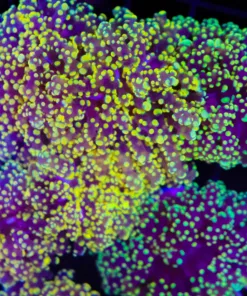
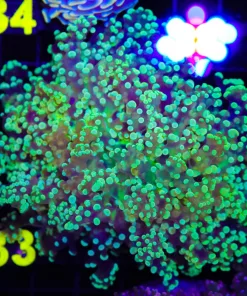
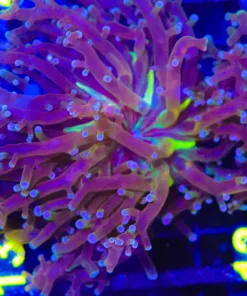
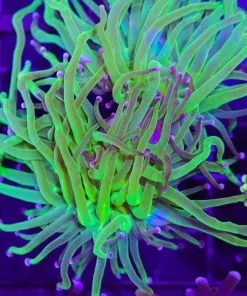
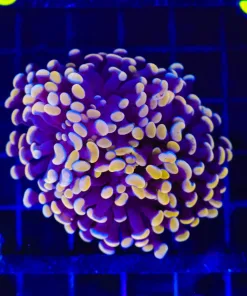
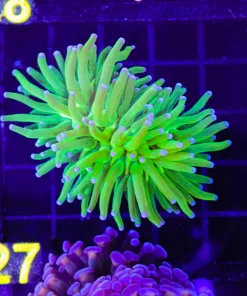
The scientific name is Euphyllia glabrescens and Torch Coral belongs to the Euphylliidae family alongside Hammer and Frogspawn Corals. In the hobby it is simply called Torch Coral or Torch. The most common and affordable colour morphs feature green or yellow tentacles with a darker body. The most sought after and valuable varieties come from Australia — Gold Torch, Indo Gold, and the legendary Aussie Gold Torch with its rich metallic yellow tentacles and dark body are among the most prized LPS corals in the entire hobby. Purple tip varieties, orange tip, and multicolour splatter patterns also exist. At Fragbox we source both Indo and Australian varieties and the quality difference between a standard Indo Torch and a premium Australian variety is immediately obvious.

Appearance
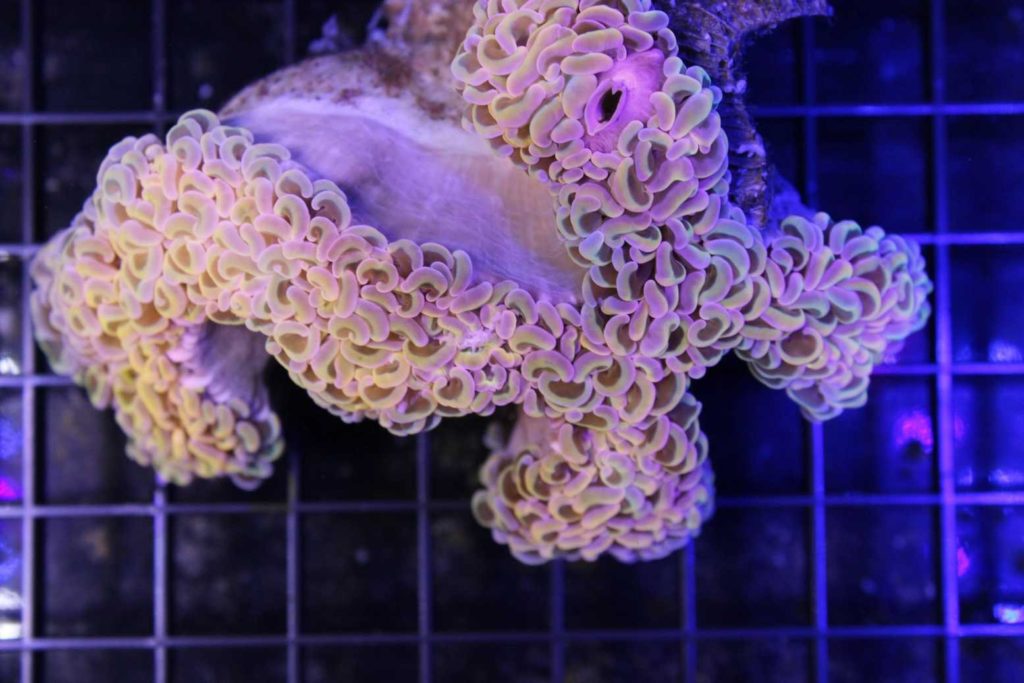
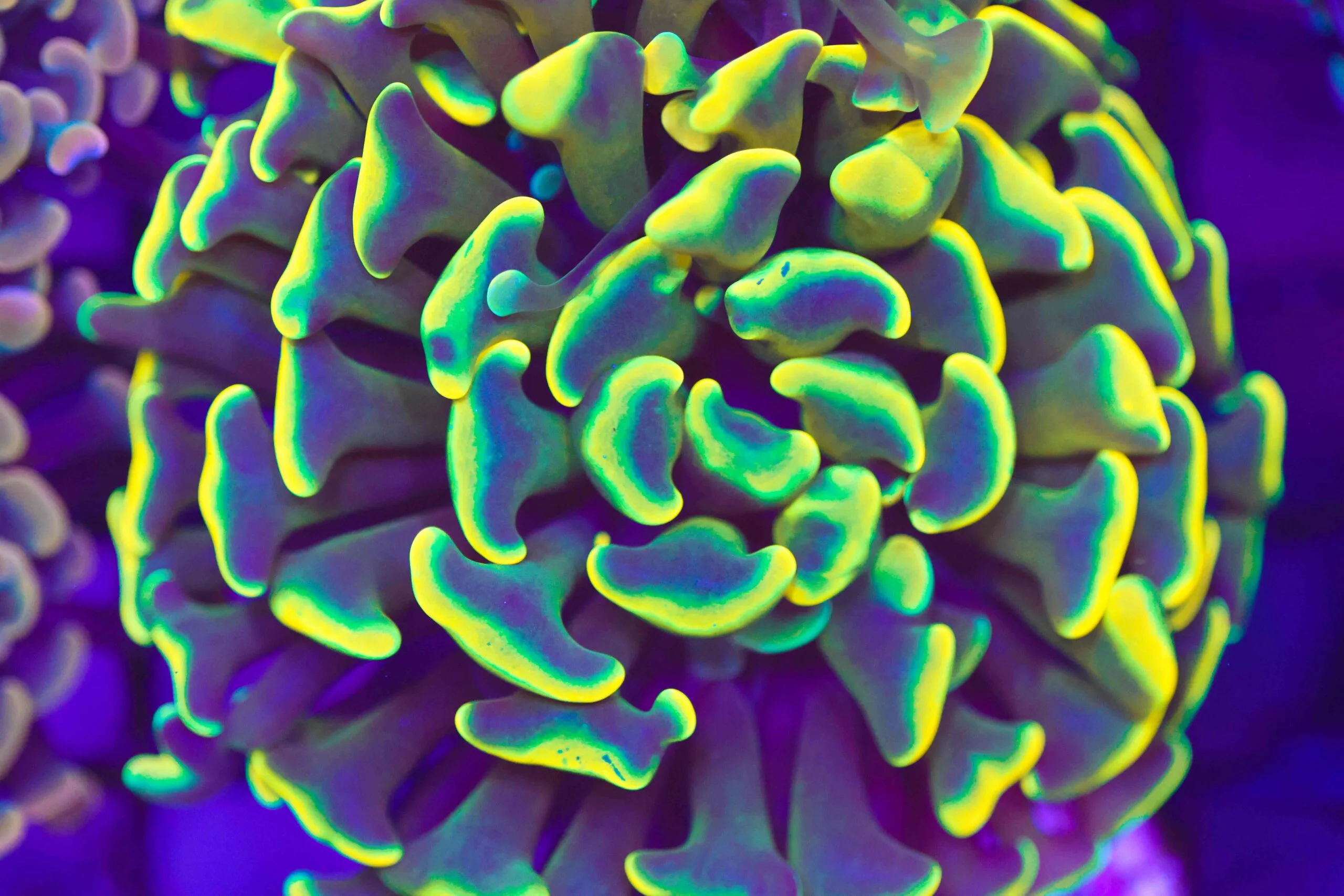
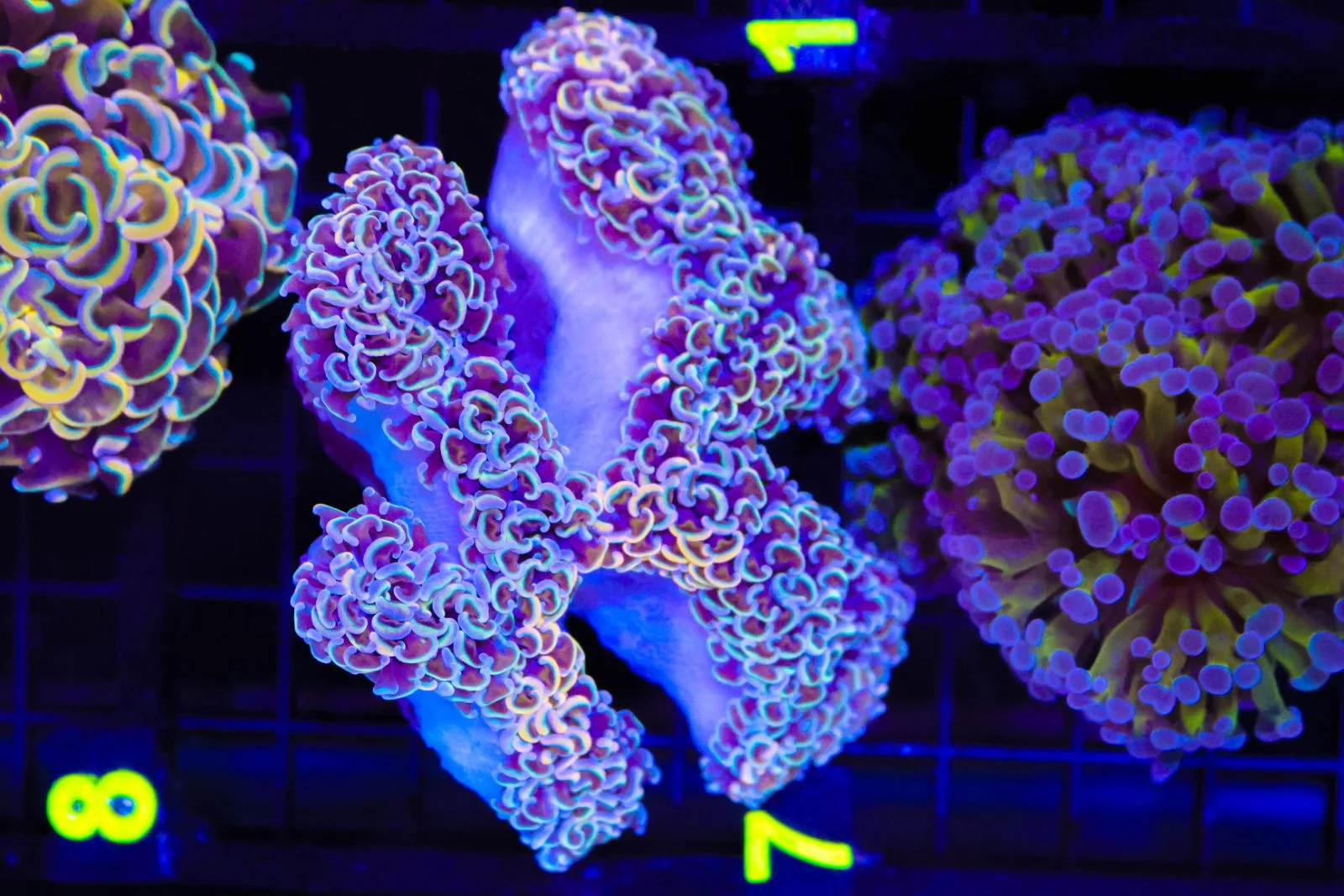
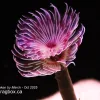
Torch Coral has a hard branching skeleton base from which one or more large fleshy polyp heads extend. Each head produces long, flowing tentacles with distinctive rounded tips — this rounded tip is what separates Torch from Hammer Coral which has hammer or anchor shaped tips. The tentacles are long, typically several inches, and wave constantly in the current creating a mesmerizing, hypnotic flow. When the polyps retract the hard skeleton base is exposed — a branching, sometimes delicate structure. Healthy Torch Coral polyps are large, full, and extended for most of the day. The tentacles contain significant stinging capability and under no circumstances should you touch them with your bare hands. Torch Corals grow by branching — the skeleton produces new branches over time and each branch develops its own polyp head.

Ease of Care
The most important factors are stable water chemistry, appropriate flow, and keeping it away from other coral species it will sting or be stung by. The most common reason Torch Corals fail in home aquariums is Brown Jelly Disease — a bacterial infection that causes rapid tissue necrosis and is almost always triggered by physical damage or stress. Understanding how to prevent and identify this condition is the most important knowledge a Torch keeper needs.

Torch Coral Lighting
Torch Coral does best under medium light. It is photosynthetic and contains zooxanthellae that provide a significant portion of its energy through light, but it is not a high light coral. PAR levels of 75 to 200 are ideal — placement in the middle section of the tank on stable rock work works well for most aquarium setups. Under too much intense light the polyps will stay retracted and over time the coral will bleach. Under too little light the polyps will remain extended but growth will slow and colour can become muted. The iconic metallic gold and yellow colours of premium Torch varieties are best appreciated under blue LED actinic lighting where they produce a rich, saturated glow.

Proper Torch Coral Flow — The Critical Factor
Flow is one of the most important and most misunderstood aspects of Torch Coral care, and getting it right makes a dramatic difference. Torch Coral needs more flow than most other Euphyllia corals — this is something we have found consistently through years of keeping and growing them. You want medium to medium-high indirect flow that causes the tentacles to sway and dance in the current. The movement is not just aesthetic — it keeps the tissue clean, prevents mucus buildup, and reduces the risk of bacterial infection. Too little flow and the tentacles hang limp, mucus accumulates, and Brown Jelly Disease becomes a serious risk. Too much direct flow and the polyps cannot extend properly. Indirect flow that moves the tentacles without blasting them directly is the goal. A wavemaker creating random flow patterns works extremely well for Torch.

Brown Jelly Disease
Brown Jelly Disease is the biggest threat to Torch Coral and every Torch keeper needs to know about it. It presents as a brown, mucus-like jelly that forms on the tissue and spreads rapidly, consuming the polyp. It is a bacterial infection that gains a foothold when the coral is stressed or physically damaged. The most common triggers are aggressive flow that tears the tentacles, physical contact with another coral, a fall, or shipping stress. If you see a brown jelly substance on your Torch act immediately — remove the affected head from the tank, cut the infected tissue away with clean scissors well below the visible infection, dip the coral in a coral dip, and return it to the tank. Speed is everything with Brown Jelly — an infection that could be stopped in hours can destroy an entire colony in a day if ignored. Dipping all new Torch Corals before they enter your tank is the best preventative measure.

Compatibility — Very Aggressive
Torch Coral is one of the most aggressive corals in the hobby. Its long tentacles pack a powerful sting and will damage or kill any coral they contact. The tentacles extend significantly farther than you might expect — always give your Torch Coral at least six to eight inches of clear space in all directions from any neighbouring coral. Torch Coral is unique within the Euphyllia family in that it will sting other Euphyllia species including Hammer and Frogspawn, which are otherwise compatible with each other. This is critical — do not place Torch next to Hammer or Frogspawn assuming they are compatible because they are in the same family. They are not compatible with Torch. Multiple Torch Corals can be placed near each other as they do not sting members of their own species. In fact creating a dedicated Torch garden with multiple morphs is one of the most spectacular things you can do in a reef tank.

Clownfish and Torch Coral
Torch Coral is one of the best host corals for Clownfish in the absence of an anemone. Clownfish will readily host in Torch tentacles and the symbiotic relationship is beautiful to watch. However there is a balance to manage — too many Clownfish or an overly aggressive hosting pair can irritate the Torch, constantly nuzzling and damaging the tentacles. Monitor the Torch after introducing Clownfish and if you see persistent retraction or tissue damage, the Clownfish may need to be separated.

Torch Coral Growth
Torch Coral grows by branching. The skeleton periodically splits and develops new branches, each of which eventually produces its own polyp head. Growth rate varies significantly between Indo and Australian varieties — Australian Torch tends to grow more slowly than Indo varieties but produces denser, more spectacular heads. In good conditions with regular feeding a single head Torch frag will develop new branches within several months. Over years a well-kept Torch can become a large, multi-headed colony that is one of the most dramatic focal points in any reef tank. The branching structure means frags can be taken by cutting individual branches from the colony.

Feeding Torch Coral
Feeding is not strictly necessary for Torch Coral survival but it produces significantly better growth, larger polyp heads, and faster branching. Torch will accept meaty foods, LPS pellets, and shrimp pieces. Target feeding with flow reduced while the tentacles are extended is effective — place food near the tentacle tips and they will pull it toward the mouth. We feed our Torch Corals in our facility and the difference in head size and branching frequency between fed and unfed specimens is clear. Feed once or twice a week for best results. For best results use Fauna Marin LPS pellets or similar.

Water Chemistry
As an LPS coral Torch builds a calcium carbonate skeleton and consumes calcium and alkalinity. We recommend keeping alkalinity at 7.7 to 8.3, calcium at 420 to 450ppm, and magnesium at 1350 to 1450ppm. Stability is critically important for Torch Coral — sudden alkalinity swings in particular will cause polyp retraction and stress that can trigger Brown Jelly Disease in a vulnerable coral. We dose daily with Atoll in our facility and consistent parameters have made a significant difference in how reliably our Torch colonies stay healthy and open. Salinity at 1.026 and temperature between 76 and 79 degrees Fahrenheit round out the ideal conditions.

Dipping Torch Coral
Always dip Torch Coral before adding it to your tank. Torch is one of the most important corals to dip because it is a host for a specific large flatworm predator that feeds on Euphyllia tissue. This flatworm is difficult to spot because it hides at the base of the skeleton and its eggs are laid flat against the skeleton surface and are very well camouflaged. A thorough dip in coral rx or two little fishies revive, followed by careful inspection of the dip water and the skeleton base for any flatworms or egg masses, is essential for every new Torch. We dip every Torch that comes through our facility without exception


HYDROS Leak Detection Sensor
Hydros Lab Grade Salinity/Conductivity Probe Kit
Bubble Magus QQ1 Hang-On Back Skimmer - Up to 25 Gallons
Hydros Start Controller
HYDROS Control X4 / XP8 PRO Pack
Digital Tester - Hanna Calcium Checker
Bubble Magus Curve 5 Extreme Protein Skimmer - Up To 130 Gallons
Bubble Magus Curve 7 Protein Skimmer - Up To 240 Gallons
Salifert Phosphate (PO4) Test kit
Hydros Dosing Pump (Requires Hydros Controller)
Hydros Launch Aquarium Controller
Gift Card $25
HYDROS Command Bus Terminator
HYDROS Control Power Supply
Hydros dc solenoid water valve
HYDROS Rope Leak Sensor Kit
Hydros Control XP8
CoralVue HYDROS System Command Bus Cable (Data + Power) 6 Foot
Hydros 1 Inch Flow Sensor
Atoll All In One Complete Additive 500ml
AquaWiz Kh Alkalinity Automatic Tester and Controller (Gen 4) - No Reagent Required!
HYDROS Minnow Aquarium Controller
Hawkins Blue Acropora Echinata (A2)
Illuminati Frag (1-2heads/frag)
Wysiwyg Fiji Leather (C61)
Dr Tim's Waste-Away 4oz
Brightwell Phosphat-E 250ml
Brightwell Strontion 500ml
Vitalis Mixed Reef Food (Video Inside)
Tiger Pistol Shrimp
Reef Roids Nano (Small Size Bag)
Refill Reagents - Hanna Calcium Checker Reagents HC (25 Tests) - HI758-26
Wysiwyg Large Acan Frag [F17]
Wysiwyg Neon Eyed Acan [F7]
Ultimate Fuge / Copepod Starting Package / Nova Refugium Light With Gooseneck
Serpent Sea Star
Blade Macro
Hydros 9ft Sense Accessory Extension Cable
Digital Tester - Hanna Phosphorus Ultra Low Range Checker HI-736
Salifert Magnesium (Mg) Test kit
Dr.Tim's - Eco-Balance Probiotic Bacteria - 4oz
5 Gallon ATO Reservoir *open box* pick up only
Nyos Quantum 160 Internal Protein Skimmer - Up to 260 Gallons
Aquaforest Component B (250ml)
Aquaforest Component A (250ml)
Vitalis Anemone Pellet Food (70g)
Gift Card $50
Aquaforest Component C (250ml)
Refill Reagents - Hanna Alkalinity Checker Reagents - Refill (25 Tests) HI772
Salifert Ammonia Test Kit (NH4)
Salifert Calcium (Ca) Test kit
Flipper Replacement Blades Stainless Steel (2-Pack) [ XL Model Scraper ]
Reef Casa Water Director
Polyplab Reef Primer One Shot
Coral Curry Bento Box
Burning Bush Macro Algae *Limted* 1-2'' piece
Red Ogo Macro Algae
Live Phyto + Tigger Pods COMBO Pack
Rooted Sprouted Black Mangrove
Pod Hotel Copepod Haven & Reef Easy Feeder
Halloween Hermit
Zebra Hermit
Astrea Snail
Harlequin Shrimp
Tuxedo Urchin
Pom Pom Crab
Red Sea Reef Foundation B (Alk) 5L
White Spot Anemone Shrimp
Prime water conditioner (1.7 fl oz)
Polkadot Hermit
Cerith Snail
Chalky Coraline Seaweed | Bossiella Cretacea
Halimeda Macro Algae
Suction Cup Caulerpa
Studio 12 Gallon Complete Kit [ Halo + Rock Included]
Red Sea DIY Aquarium Net Cover 24" x 24"
Red Sea ReefWave 25
Reef Nutrition Pac Pods
March's Homemade Coral Curry ! (1oz size)
Cube 15 Gallon Complete Kit [ Halo + Rock Included]
Reef Casa Beam LED Light
Hydro Pump - Reef Casa Return Pump Large (396 Gallons / Hour)
6 Gallon Aquarium Kit With Rock + Halo
Power Hub - Aquarium Electrical Power Outlet
Laguna 24 Gallon Saltwater Aquarium Kit
Reef Casa Bacteria Hotel Blocks (12-30 Gallons)
Reef Casa Laguna 24 Gallon All In One Aquarium
Vitalis LPS Coral Food Pellet (70g) (Video Inside)
Reef Casa Dual Random Flow Generator
Salifert PH Test Kit
Reef Nutrition Betta Brine 6oz
Salifert Nitrate (NO3) Test kit
Reef Nutrition Oyster-Feast - 6oz
Reef Nutrition Arcti Pods 6oz
Tigger-Pods Live Copepods - 6oz
Reef Nutrition Phyto-Feast Live
Gift Card $200
Gift Card $100
Red Sea Trace Color B- Potassium+ (500ml)
Refill Reagents - Hanna Phosphorus Ultra Low Range Reagents (25 pack)
Aquaforest Component Strong (75ml)
Reef Casa Floor Saver Towel
Flipper DeepSee Magnified Magnetic Aquarium Viewer 3" Nano
Reef Casa Digital Aquarium Thermometer
Dragon's Tongue Macro Algae
Zebra Sea Star *Reef Safe, Beautiful & Great Scavenger ! *small*
Wysiwyg Gold Craft Acan Frag [F11]
Small Berghia Nudibranch
Wysiwyg Micromussa [F26]
La Casa 35 Gallon Complete Stater Kit With Manta + Whirlpool Skimmer
Oceamo Lab MS - Advanced ICP Test
Fluval Evo Evo 13.5 Lid
Sicce Syncra Silent 1.0 (251gph, 5ft head)
Reef Casa Super Set 300ml Jumbo Size Bottle
Blue Collector Urchin
Mini ( Hold 96 Frags)
Halo Light Diffuser
Reef Casa Goby Frag Rack (7 Hole - 1/4'' Glass)
Reef Casa Frag Club
Reef Casa Hammer Head Frag Rack (11 Hole – 1/4” Glass)
Veranda 4 Hole Magnetic Frag Rock
Peppermint Shrimp
Emerald Crab
Skunk Cleaner Shrimp
Wysiwyg Cotton Candy Acan [F21]
Wysiwyg Snake Skin Acan [F3]
Wysiwyg Raspberry Lane Blastomussa [F24]
Wysiwyg Neon Eyed Acan [F10]
Wysiwyg Cheeto Acan [F19]
Wysiwyg Golden Blue Onion Ring Acan [F5]
Wysiwyg Golden Hulk Acan [F16]
Wysiwyg Purple Hornet Zoanthid [F30]
Wysiwyg Green Star Polyp [F14]
Wysiwyg Acan Frag [F8]
Wysiwyg Large Purple Green Acan Frag [F6]
Wysiwyg Large Purple Goblin Acan Frag [F12] *
Wysiwyg Green Mouth Fairy Acan [F18]
Wysiwyg Cherry Pie Blastomussa [F23]
Wysiwyg Bubble Boss Blastomussa [F28]
Marineland Maxi-Jet 400
Wysiwyg Fruity Ultra Acan [F1]
Wysiwyg Green Mouth Monster Acan [F2]
Wysiwyg Feathery Blatomussa [F27]
Fish Auto Feeder
Vitalis Marine Algae Pellet 1mm 70g