


What Is Gonipora Coral?
Gonipora Coral, also known as Flowerpot Coral or Daisy Coral, is one of the most dramatic and visually captivating LPS corals in the reef aquarium hobby. My name is March, I am the owner here at Fragbox and I have been keeping and selling Gonipora for over 16 years. Gonipora has a reputation in the hobby for being difficult to keep and that reputation is not entirely undeserved — but in our experience at Fragbox the challenges are well understood and manageable. When you know what Gonipora needs and you give it consistently, it is not the impossible coral some make it out to be. The reward for getting it right is one of the most spectacular and mesmerizing displays in reef keeping.
Gonipora Names
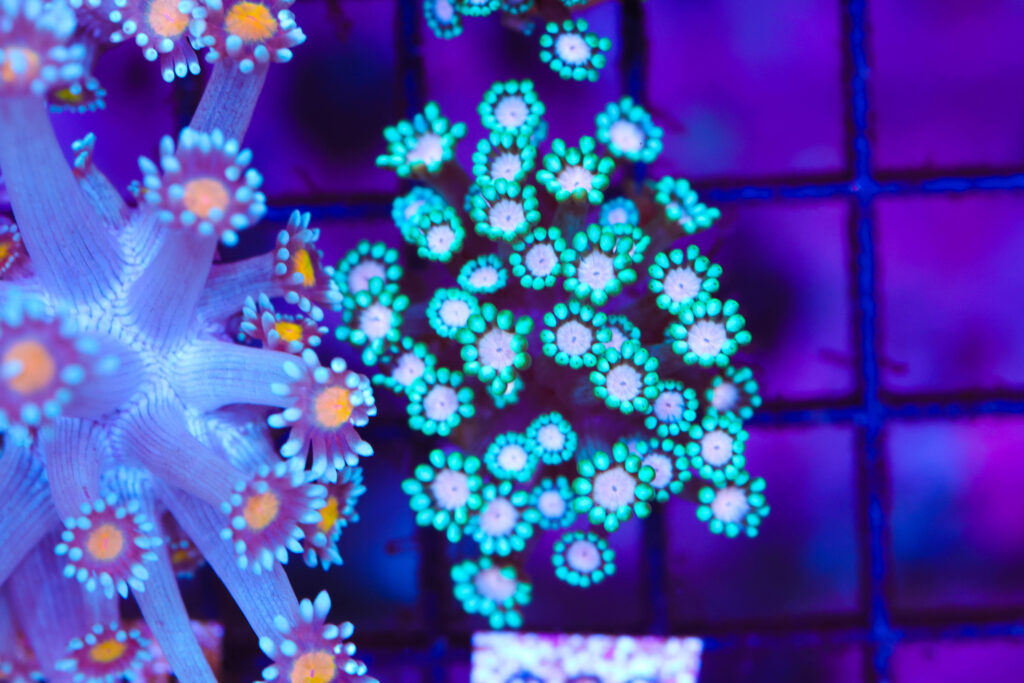
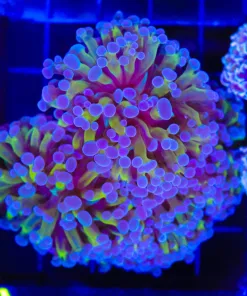
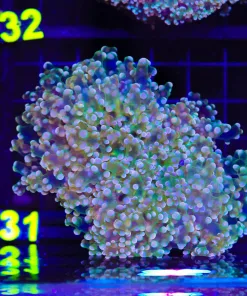
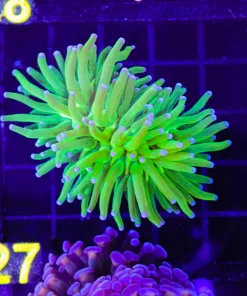
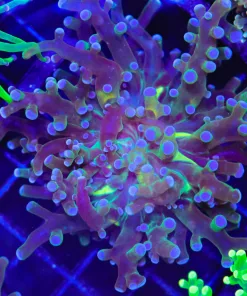
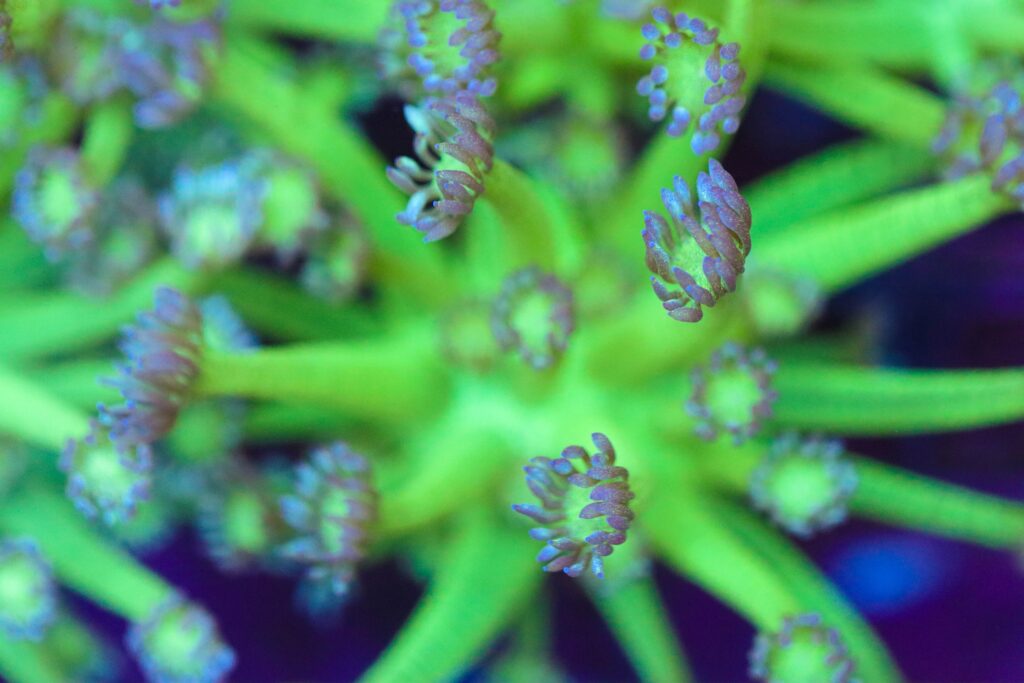
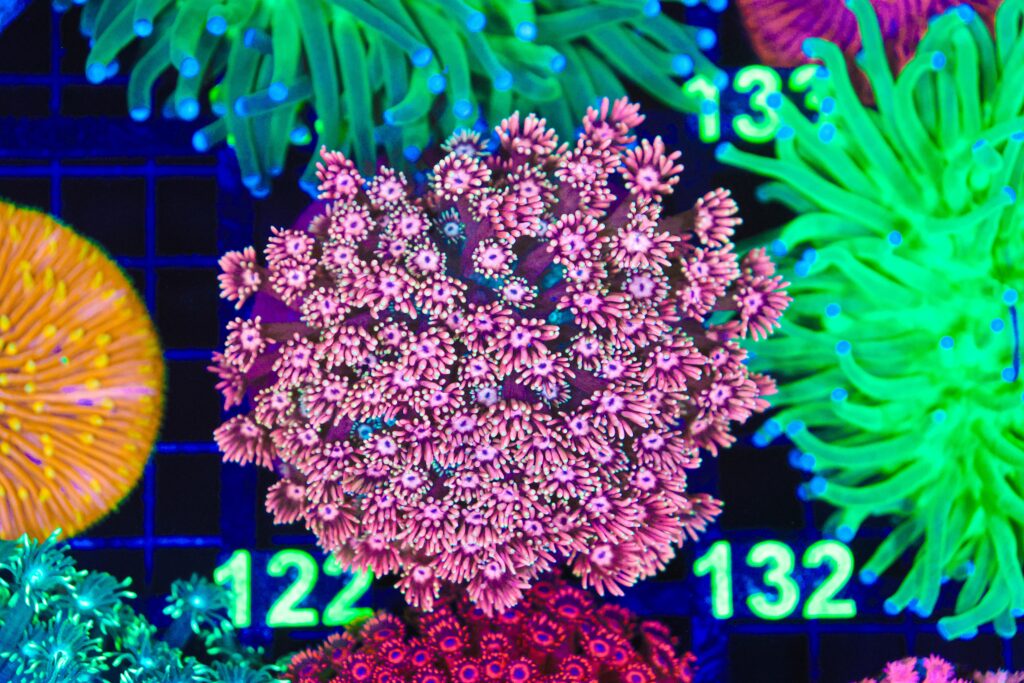
Gonipora goes by several trade names — Flowerpot Coral is the most widely used, followed by Daisy Coral. The scientific name is Goniopora sp. and there are many species within the genus. It is important not to confuse Gonipora with Alveopora — they look very similar but Gonipora has 24 tentacles on each polyp while Alveopora has 12. Gonipora also comes in more colour varieties and is generally considered the more demanding of the two. The most common colours in the hobby are green, brown, and red-pink, with the rarer purple, yellow, and blue varieties being highly sought after collector pieces. The Blue Zeus and Blue Ice Leopard varieties we grow at Fragbox are among the most striking Gonipora specimens available.
Appearance
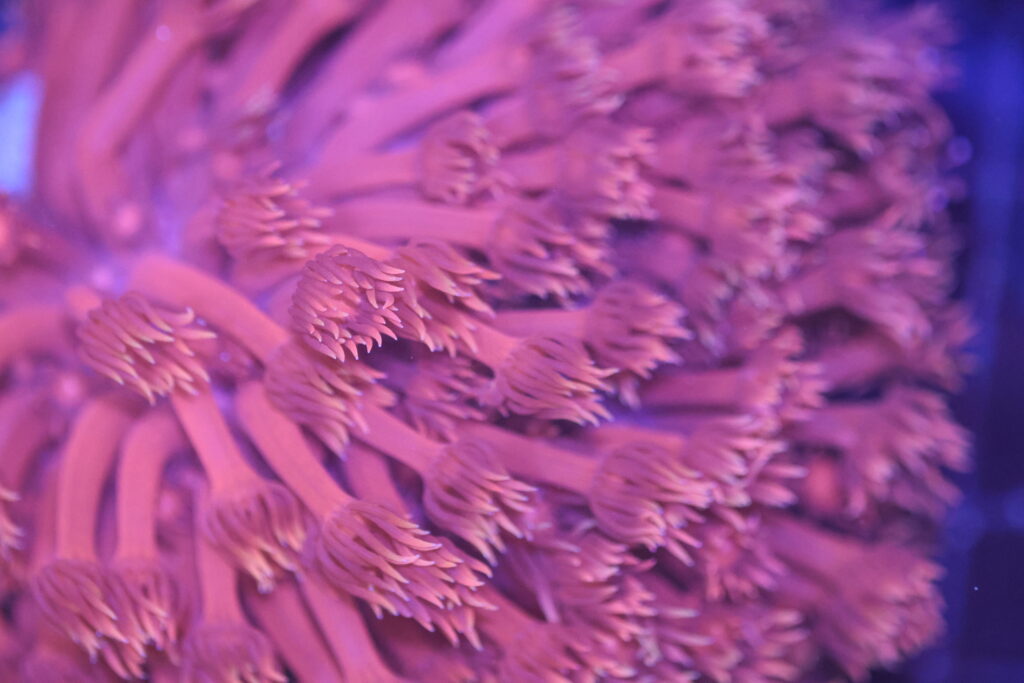
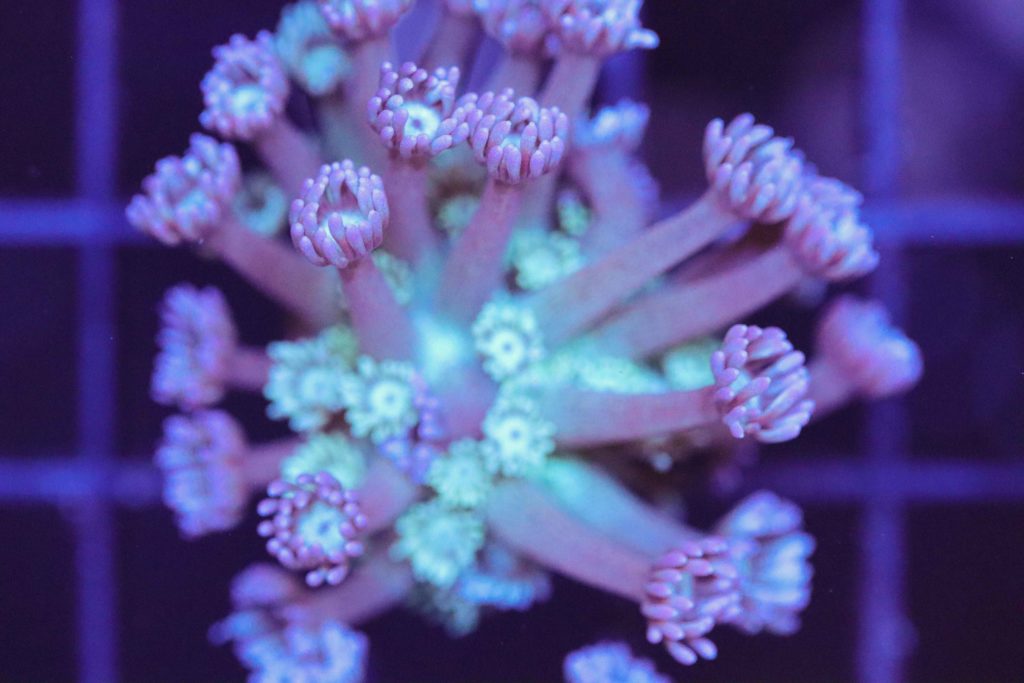
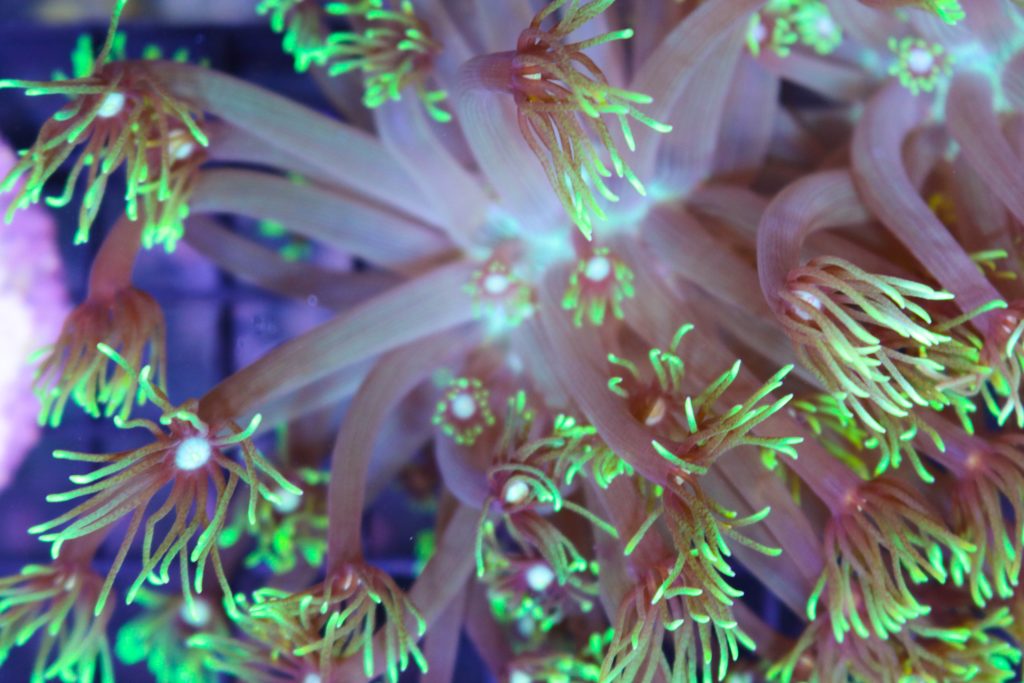
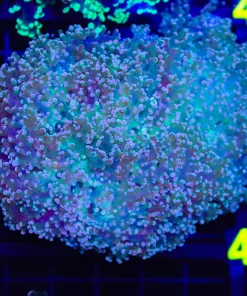
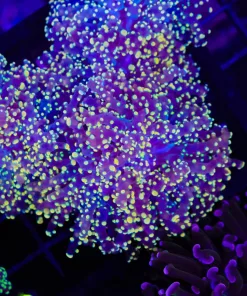
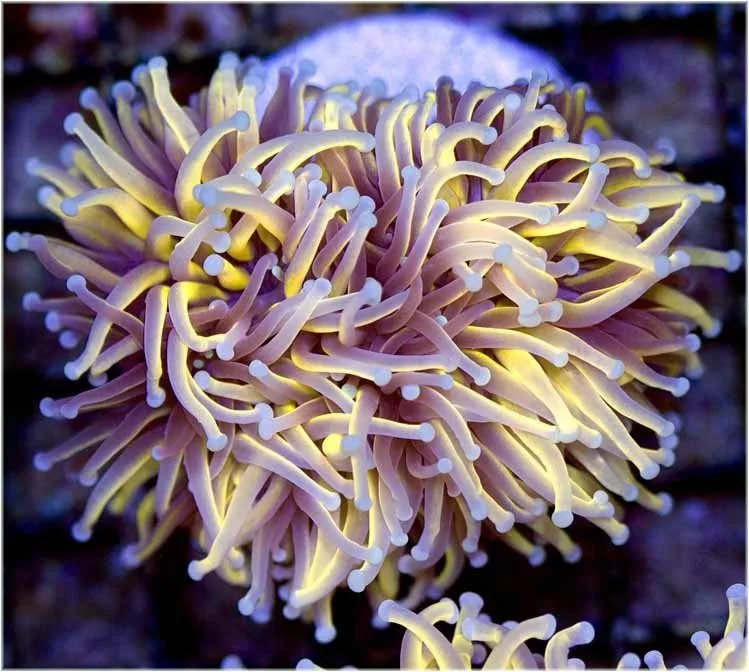
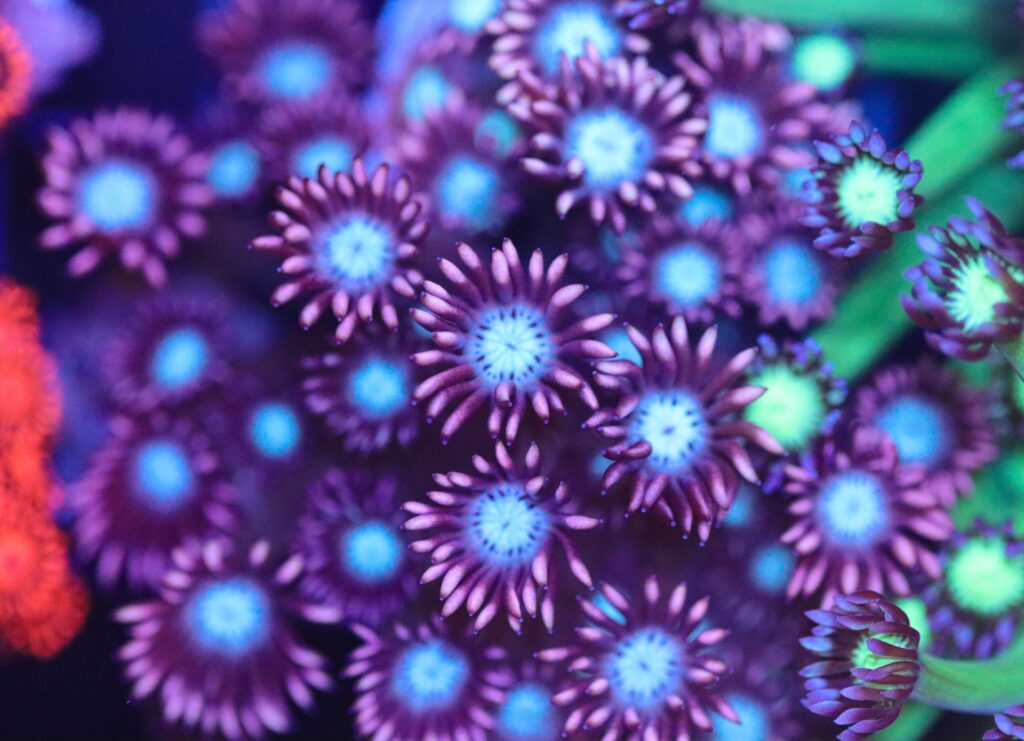
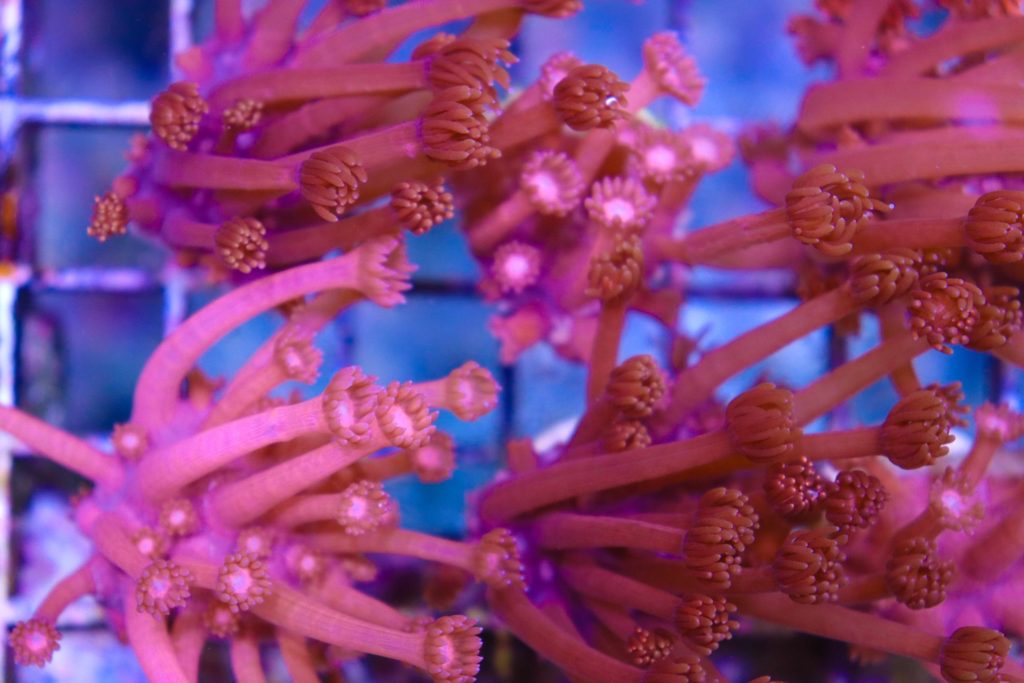
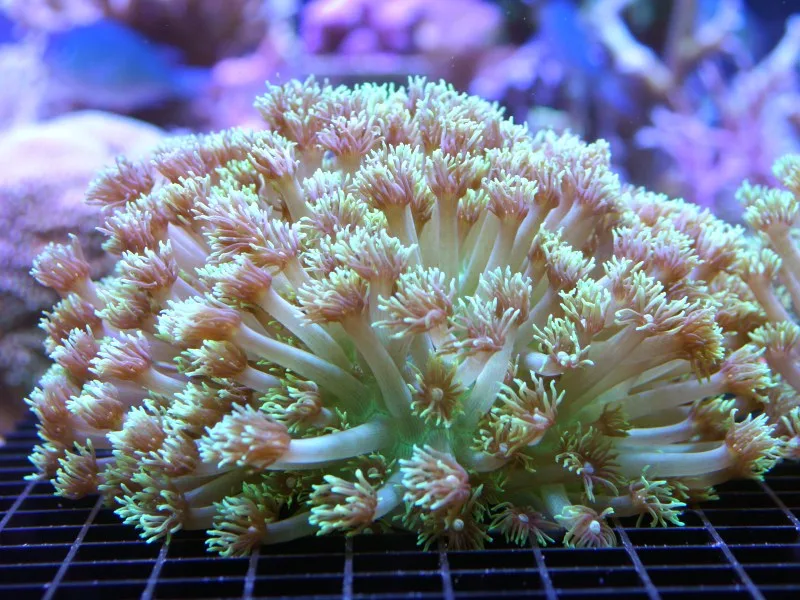
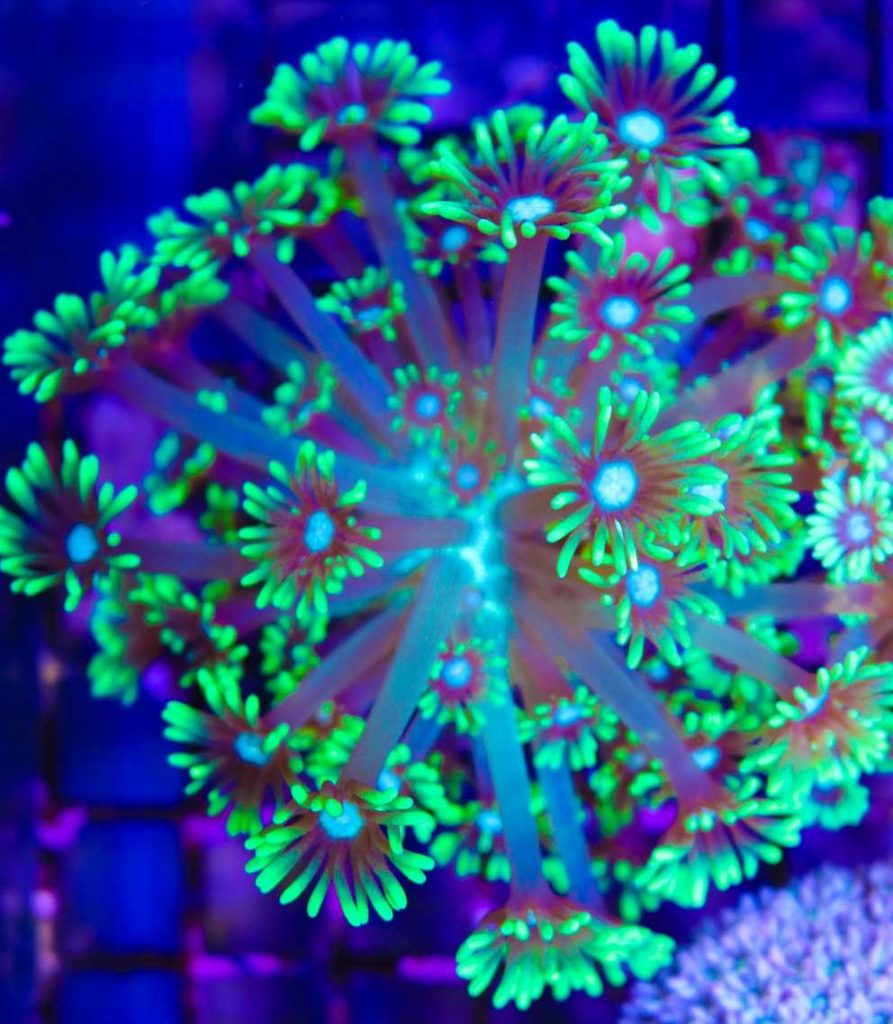
Gonipora Coral has a hard branching or massive skeleton base from which hundreds of long, slender polyps extend simultaneously. Each polyp has 24 tentacles arranged around a central mouth and they extend several inches beyond the skeleton. When the entire colony is open — which in a healthy, well-kept specimen is most of the time — the effect is like a living bouquet of flowers swaying in slow motion. The polyps move constantly in the flow and the visual impact of a large, fully extended Gonipora is genuinely breathtaking. It is one of those corals that stops people in their tracks in our store display. The skeleton is visible only when the polyps are retracted and a consistently retracted Gonipora is a sign that something is wrong.
Ease of Care — What You Need To Know First
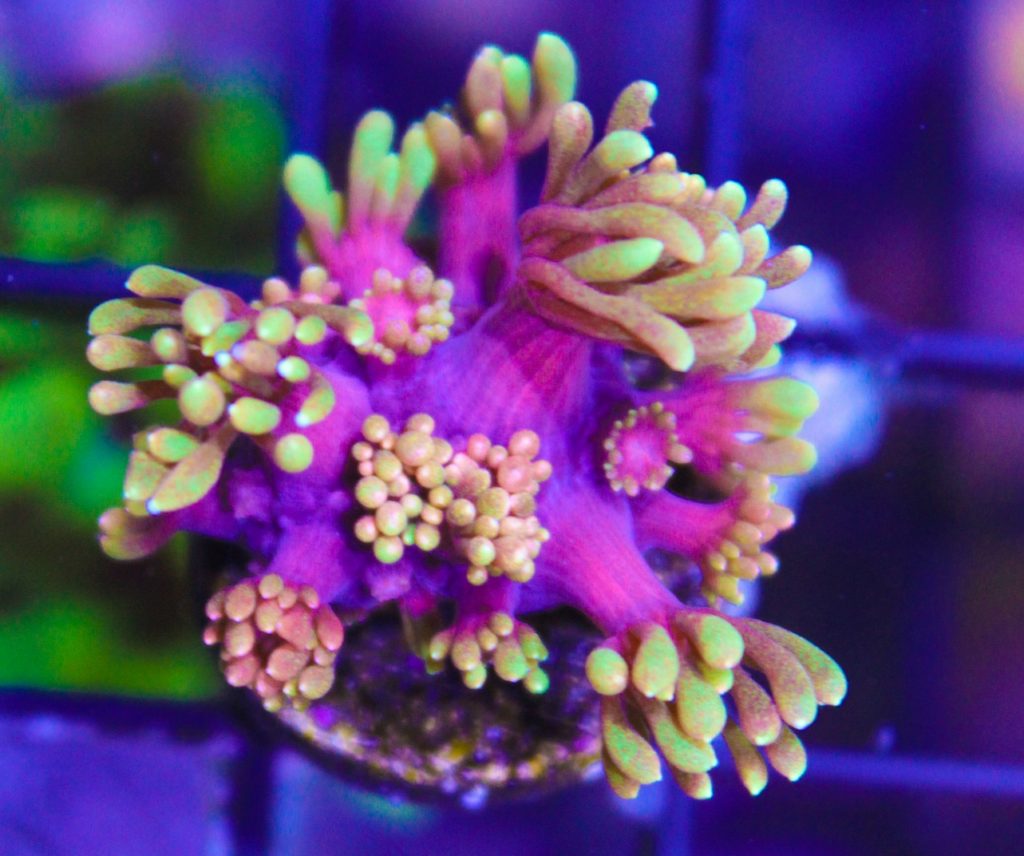
Gonipora has earned its difficult reputation primarily because of one requirement that, when overlooked, leads to failure — it must be fed regularly and it will not survive long term without feeding. This is not a coral you can set and forget. In almost every case where Gonipora fails in a reef tank, the cause is insufficient feeding. With regular feeding Gonipora is actually more straightforward than its reputation suggests. We keep and grow Gonipora successfully at Fragbox and have shipped thousands across Canada. The key is understanding that this coral is a filter feeder and a hunter and it needs to eat to thrive. Get the feeding right and Gonipora rewards you magnificently.

Gonipora Lighting
Gonipora does well under medium light. It is photosynthetic and contains zooxanthellae algae that provide energy through light, but it is not a high light demanding coral. PAR levels of 75 to 200 are appropriate. Placement in the middle to lower section of the tank is ideal. Under too much intense light the polyps will retract and stay retracted — this is the coral protecting itself from light stress. Under the right medium light conditions the polyps stay extended for most of the day. The long, flowing polyps of Gonipora look particularly spectacular under blue LED actinic lighting where they take on an iridescent, otherworldly quality.
Proper Gonipora Flow
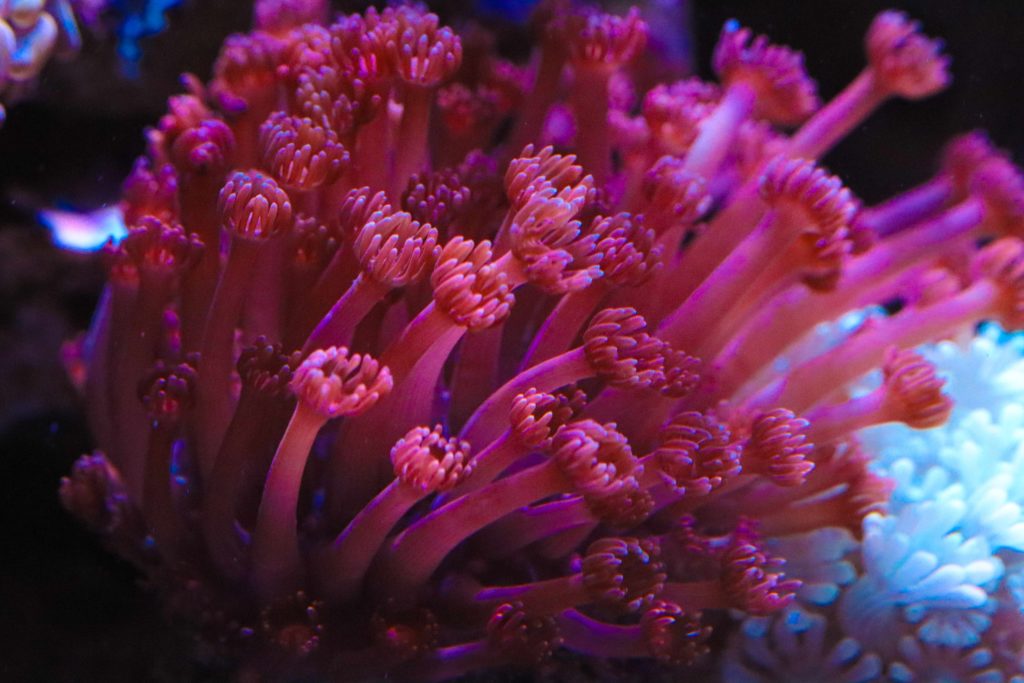
Low to medium indirect flow is essential for Gonipora. The polyps are long and delicate and direct, strong flow will cause them to stay permanently retracted which prevents feeding and photosynthesis. You want enough water movement to gently sway the polyps and carry food particles across the colony but nothing aggressive or direct. A gentle wavemaker on a low to medium setting pointed away from the coral is ideal. One important practical note — the long extended polyps of Gonipora make it a sail in the water column and the coral can easily be knocked off its position by stronger flow. Secure your Gonipora firmly to its rock or the sandbed. We recommend placing it in the sand at the bottom of your tank where it can anchor itself and the flow is naturally gentler near the substrate.
Gonipora Placement
We recommend placing Gonipora in the sand at the bottom of your tank or on low-lying stable rock work in the lower third. On the sandbed it can anchor itself naturally over time. If placed on rock work make sure it is completely stable — a Gonipora that falls over will retract and may not recover if left on its side for too long. Give it substantial space around it. The polyps can extend many inches beyond the skeleton base and Gonipora is semi-aggressive — those extended polyps will sting any neighbouring coral they touch. Keep at least six inches of clear space around your Gonipora so the extended polyps cannot reach neighbouring corals.
Feeding — The Most Important Section
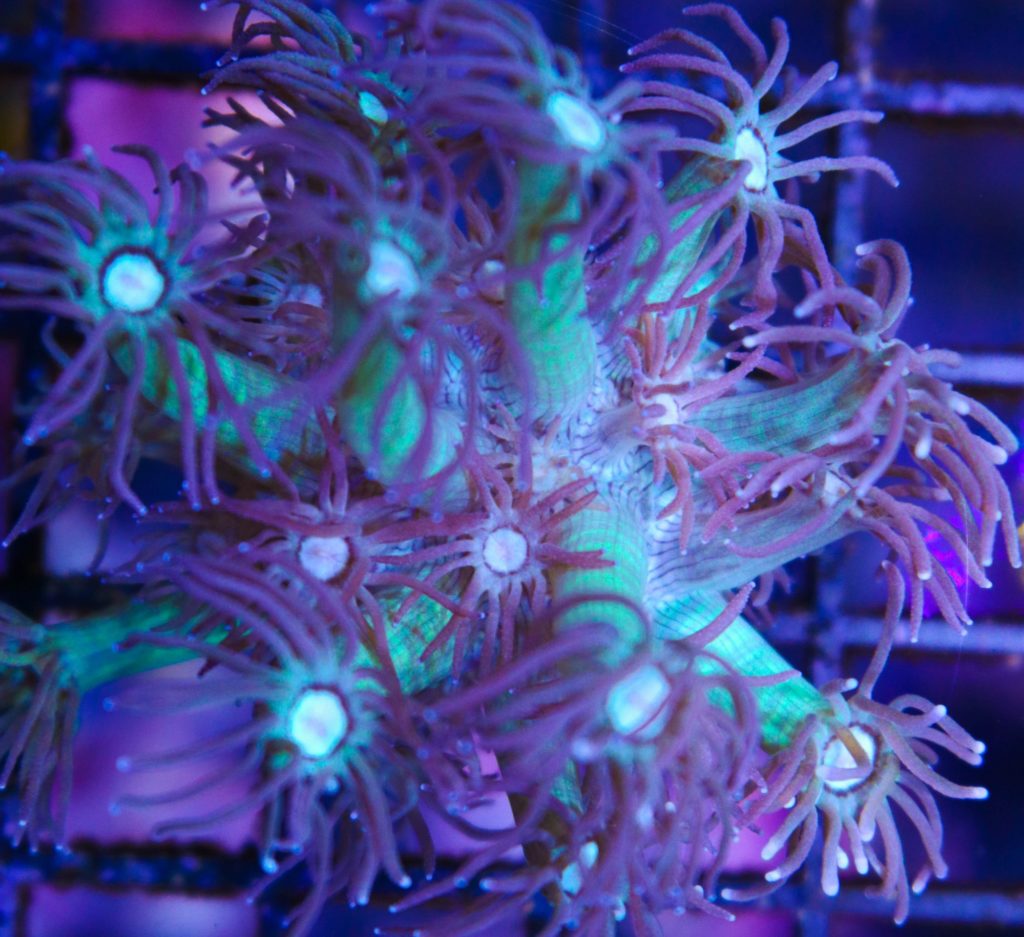
We cannot overstate this. Feeding is not optional for Gonipora. Without regular feeding Gonipora will slowly decline and eventually die regardless of how perfect your other parameters are. In the wild Gonipora is a highly active filter feeder and hunter of zooplankton. In a reef aquarium you must replicate this. We exclusively use and recommend Reef Roids for feeding Gonipora — broadcast a small amount into the tank with flow reduced twice a week and let the particles drift over and into the extended polyps. The polyps will visibly capture and consume the food. Within days of starting a regular feeding regimen you will typically see improved polyp extension and more consistent opening. Within weeks you will see new growth. Feeding is the single biggest factor in Gonipora success and it is non-negotiable.
Gonipora vs Alveopora
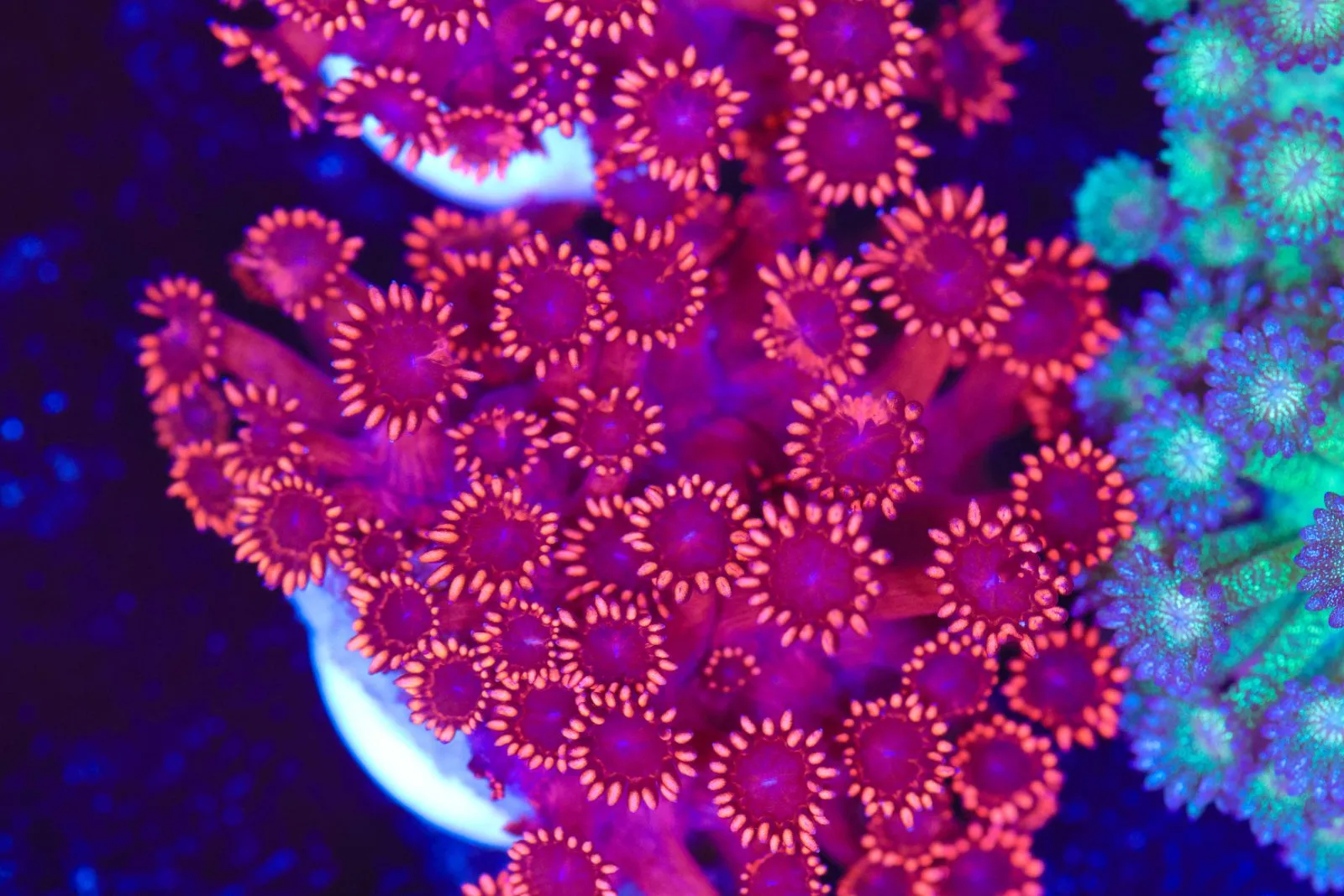
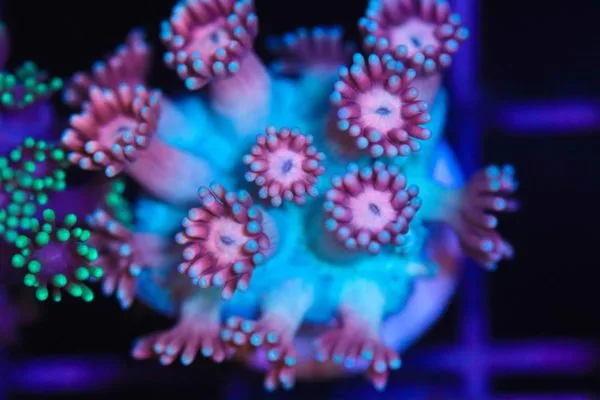
Because they look so similar this is worth addressing clearly. Gonipora and Alveopora are frequently confused and the easiest way to tell them apart is polyp count — Gonipora has 24 tentacles per polyp and Alveopora has 12. Gonipora polyps are generally longer and more slender while Alveopora polyps are slightly shorter and stubbier. Gonipora comes in more colour varieties and is generally considered more demanding than Alveopora. Both require feeding but Gonipora\’s requirement is more strict. Both are spectacular but they are distinct corals with distinct characteristics and should not be treated identically.
Gonipora Growth
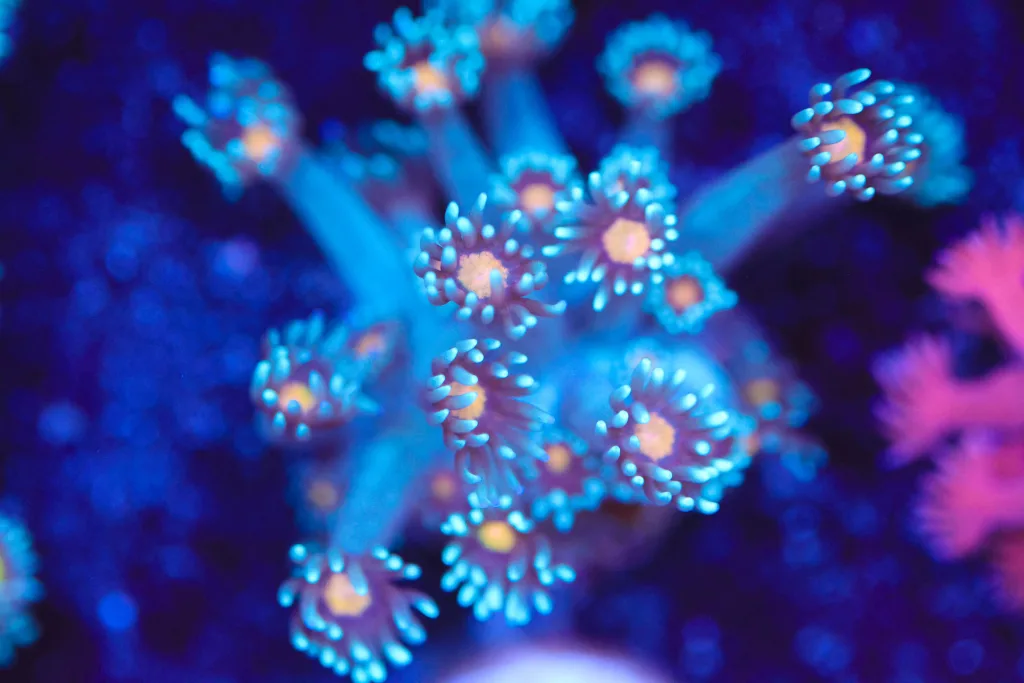
A well-fed, properly placed Gonipora will grow steadily. New polyps emerge from the skeleton edges and the colony gradually expands. Growth rate is noticeably faster in fed versus unfed specimens — another reason why consistent feeding is so important. A healthy growing Gonipora develops an increasingly impressive skeleton structure and the colony becomes more and more dramatic in appearance over time. Branching varieties develop new branches from the base and become genuinely impressive architectural pieces in the tank.
Water Chemistry
As an LPS coral Gonipora builds a calcium carbonate skeleton and consumes calcium and alkalinity. We recommend keeping alkalinity at 7.7 to 8.3, calcium at 420 to 450ppm, and magnesium at 1350 to 1450ppm. Stability is critical — sudden parameter swings will cause polyp retraction and stress that can take days to recover from. Consistent daily dosing with Atoll in our facility has made a noticeable difference in how reliably our Gonipora colonies stay extended and grow. Salinity at 1.026. Temperature between 76 and 79 degrees Fahrenheit. Moderate nutrients are tolerated — Gonipora does not require ultra-low nitrates and phosphates.
Compatibility
Gonipora is semi-aggressive. The extended polyps contain stinging cells and any coral they contact will be damaged over time. This is not an immediate dramatic sting like a Torch or Hammer Coral but a slow, persistent irritation that damages tissue with repeated contact. Because the polyps extend so far from the skeleton, Gonipora can affect corals at a much greater distance than its skeleton footprint suggests. Always give Gonipora generous space and check periodically that no neighbouring corals are being reached by the extended polyps.