What Are Clove Polyps?
Clove Polyps are one of the most underrated soft corals in the reef aquarium hobby. My name is March, I am the owner here at Fragbox and I have been keeping and selling Clove Polyps for over 16 years. They are one of those corals that does not get nearly enough credit — easy to keep, fast growing, incredibly unique looking, and available in some stunning colour morphs that rival far more expensive corals. If you are looking for a soft coral that is a little different from the usual suspects, Clove Polyps deserve a serious look.

Clove Polyp Names
Clove Polyps go by several names in the hobby and it can get confusing. You will hear them called Clove Polyps, Eight Tentacle Polyps, Encrusting Polyps, and sometimes they are compared to Pipe Organ Coral and Xenia since they grow in a similar colonial fashion. The name Clove Polyp comes from the appearance of the individual polyps which resemble a clove when retracted. The scientific name is Clavularia and there are many different species within this genus. At Fragbox we currently grow Yellow Palm Clove Polyps and Rainbow Clove Polyps in our aquaculture facility right here in Toronto.

Clove Polyp Appearance
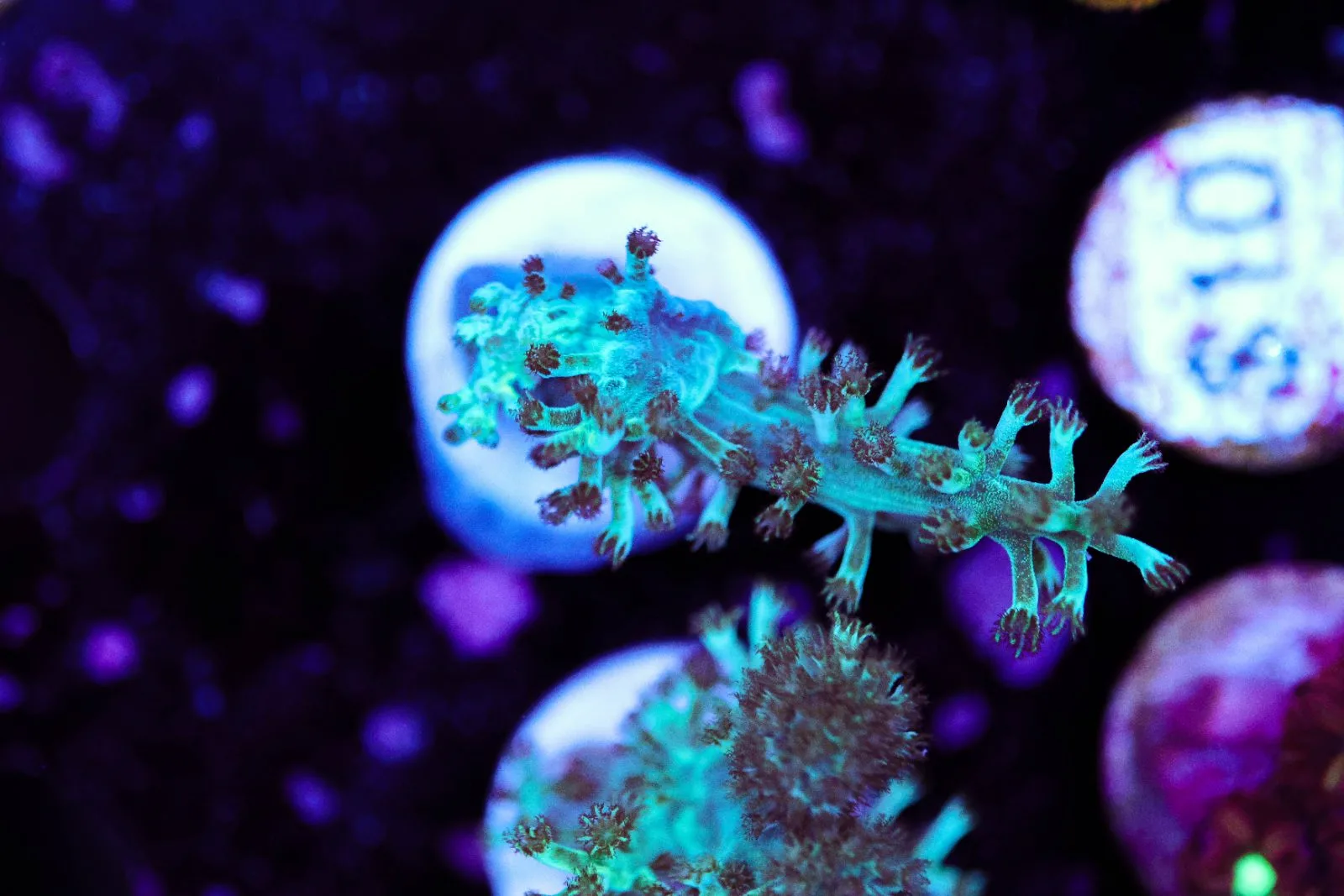
Clove Polyps are a colonial coral made up of multiple individual polyp heads connected by a fleshy network of tubes called a stolon. Each polyp has eight feathery tentacles that extend when open and retract completely when disturbed or when conditions are not ideal. The polyps can reach heights of 2 to 3 inches when fully extended which gives the colony a beautiful fluffy, almost grass-like appearance when fully open. The heads are generally half an inch to three quarters of an inch across. The most sought after colour morph is the Rainbow variety which features a green mouth surrounded by blue and orange fringes — it is genuinely one of the most striking soft corals you can keep. Yellow Palm varieties are equally beautiful with rich yellow colouration that pops under blue LED lighting.

Ease of Care
Clove Polyps are beginner friendly in almost every way. They do not require intense lighting, are forgiving of water quality fluctuations, and are photosynthetic so they can meet all of their energy needs from your existing reef tank lighting. Unlike SPS corals they have no calcium or alkalinity demands. Unlike some LPS corals they have no aggressive feeding requirements. They are truly a set it and forget it coral that rewards you with fast growth and stunning colours without demanding much in return. We grow ours in our farm here at Fragbox entirely under LED lighting with no supplemental feeding and they grow vigorously.

Clove Polyp Growth
Clove Polyps are fast growers once they settle into your tank. They reproduce by budding rather than splitting — new polyp heads emerge from the stolon network and the colony spreads laterally across the rock surface. In good conditions a single frag plug can cover a rock within a few months. Like Kenya Tree Coral they can be somewhat invasive if not managed, so it is worth thinking ahead about where you place them. They will encrust over neighbouring rock and if placed too close to other corals can begin to grow into them. Plan ahead and give them a dedicated rock or an isolated area where they have room to spread. The good news is they are easy to frag and propagate, so excess growth can always be turned into new frags.

Clove Polyp Lighting
Clove Polyps prefer lower light conditions than most corals. In the wild they are often found in shaded reef environments and in deeper water where light intensity is reduced. In a home aquarium we recommend placing them in the bottom third of the tank or in a shaded spot on your rock work. If the polyps remain consistently retracted it is often a sign they are receiving too much light — try moving them lower or to a more shaded position before making any other changes. Under strong blue LED actinic lighting the Rainbow colour morph in particular takes on an absolutely electric appearance. We run our Clove Polyps at around 30 to 50 PAR in our farm and they thrive.

Proper Clove Polyp Flow
Clove Polyps prefer low to medium flow. You want enough water movement to gently sway the polyps and keep detritus from accumulating on the colony but not so much that the polyps are blowing around aggressively. If the flow is too strong the polyps will stay retracted and the coral will not be able to photosynthesize properly. Random, indirect flow from a wavemaker pointed away from the coral is ideal. Too much direct flow is the most common reason Clove Polyps fail to open in a new tank. If your colony is not extending within a day or two of placement, check the flow first.
Placing Clove Polyps In Your Tank
Clove Polyps should be placed in the bottom third of the tank on a dedicated rock or rock island. Because they can be difficult to remove once they begin encrusting, placing them on a rock that is not connected to your main aquascape gives you the flexibility to move or frag the colony later without disturbing your main rock work. Frags should be mounted as close to vertical as possible so the polyps can extend upward naturally. They can be glued to a frag plug or rubble rock with standard reef safe coral glue. At Fragbox we sell our Clove Polyp frags already mounted on frag plugs for easy placement.

Clove Polyp Feeding
Clove Polyps are photosynthetic and do not need to be fed in order to thrive. Your existing reef tank lighting will provide all the energy they need. That said they will benefit from occasional broadcast feeding with a fine particle food. They can be target fed with Reef Roids or similar fine coral foods and the polyps will capture particles as they drift by. Feeding is completely optional and in our farm we grow ours without any supplemental feeding at all. If you do choose to feed, keep portions small — excess nutrients can encourage nuisance algae growth on a fast spreading colony.

Water Chemistry
We always recommend keeping your aquarium within natural sea water parameters — salinity of about 1.026, calcium 450ppm, alkalinity of about 8, and magnesium 1400. Clove Polyps are soft corals and do not consume calcium or alkalinity in any meaningful way so they are very tolerant of parameter swings that would stress SPS and LPS corals. They do prefer clean, stable water overall and will show their best colours in a well maintained tank. Higher nutrient levels are generally tolerated well, making them a good choice for tanks that are not yet fully dialled in.

Propagation
Clove Polyps are easy to propagate and are an excellent coral to practice fragging on. A small piece cut from the colony with clean scissors or a razor blade will grow into a new colony when placed on rubble rock or a frag plug. The key is to include a small piece of the stolon network in each frag — the stolon is the fleshy mat that connects all the polyps and new heads will emerge from it. Place frags in a low flow area and they will attach and begin growing within a week or two. We have aquacultured thousands of Clove Polyp frags at our facility in Toronto and it is one of the most reliable corals we propagate. Because we grow our own in house we rarely need to import Clove Polyps, which means you are getting a hardened, tank raised coral that is already adapted to aquarium conditions.
Dipping Clove Polyps
It is always good practice to dip any coral before adding it to your tank. Clove Polyps have very few known pests but a quick dip in coral rx or two little fishies revive will give you peace of mind and prevent any unwanted hitchhikers from entering your system. Because our Clove Polyps are aquacultured in house they have significantly lower pest pressure than wild caught corals, but we still recommend dipping as standard practice for any new coral addition.