

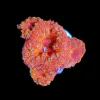


What Is Ricordea Florida?
Ricordea Florida is one of the most beautiful and sought after mushroom corals in the reef aquarium hobby. My name is March, I am the owner here at Fragbox and I have been keeping and selling Ricordea Florida for over 16 years. It is a coral that does not get the mainstream attention of Hammer Corals or Zoanthids but among serious collectors it is one of the most prized soft corals available. The colour combinations in high end Ricordea Florida specimens are extraordinary — vivid oranges, electric blues, multicolour rainbows, and the incredibly rare pink varieties that command significant prices. For a reefer who appreciates truly exceptional colour in an easy to keep package, Ricordea Florida is special.

Ricordea Florida Names
The scientific name is Ricordea florida and the Florida in the name is a direct reference to its natural habitat — the Florida Keys and Caribbean reefs where it is found in abundance. In the hobby it is called Florida Ricordea, Ricordea, or simply Ric. It is important to distinguish it from Ricordea Yuma which is its Indo-Pacific relative. The key visual difference is in the tentacles — Florida Ricordea has uniformly small, densely packed bubble-like tentacles giving it a consistently bumpy, jewel-like surface texture. Yuma has alternating rows of large and small tentacles giving it a more complex, textured appearance. Both are beautiful but Florida tends to produce more vivid, saturated colours particularly in the orange, red, and multicolour rainbow varieties that are its trademark.

Appearance
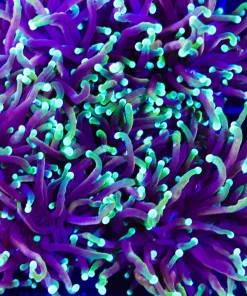
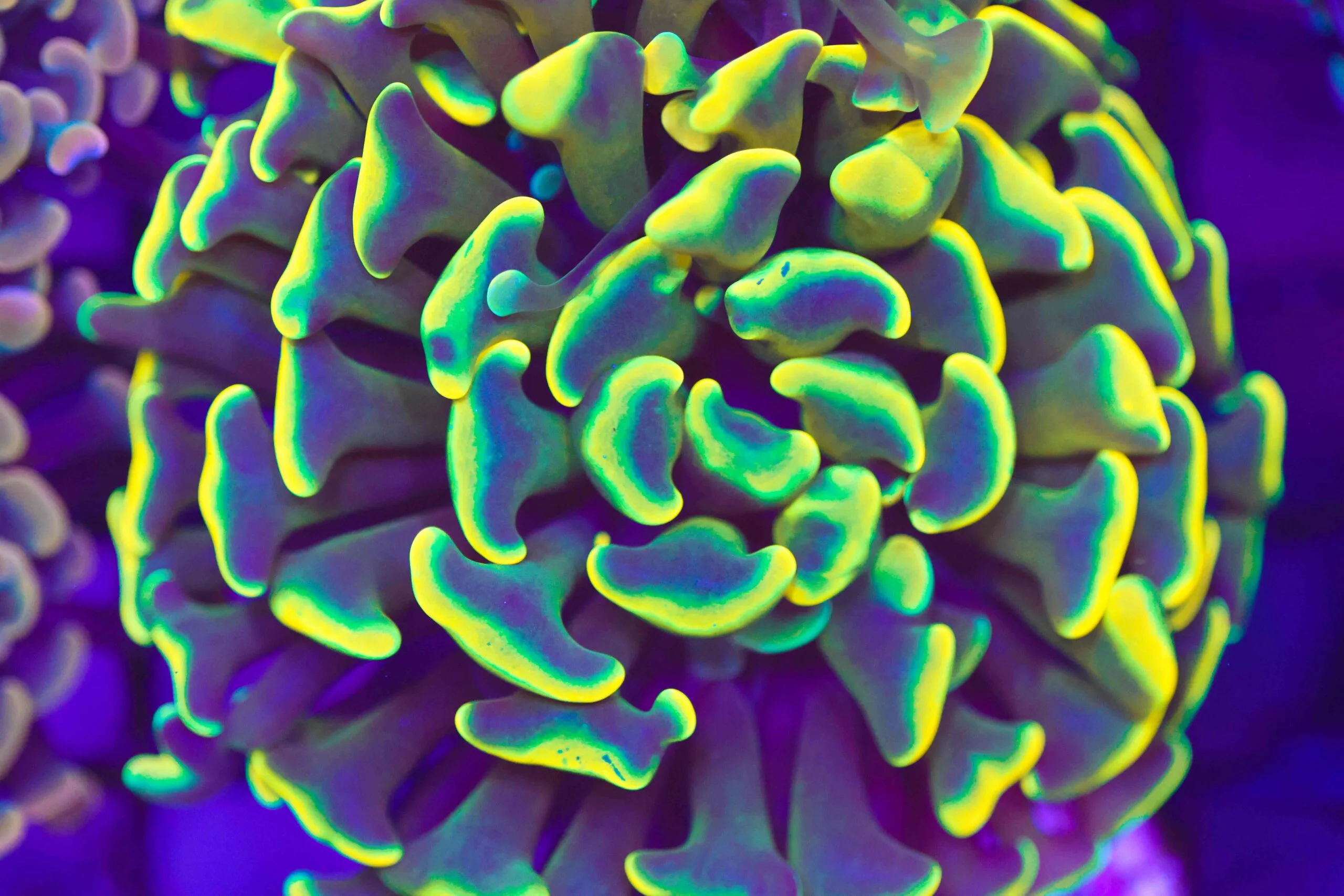
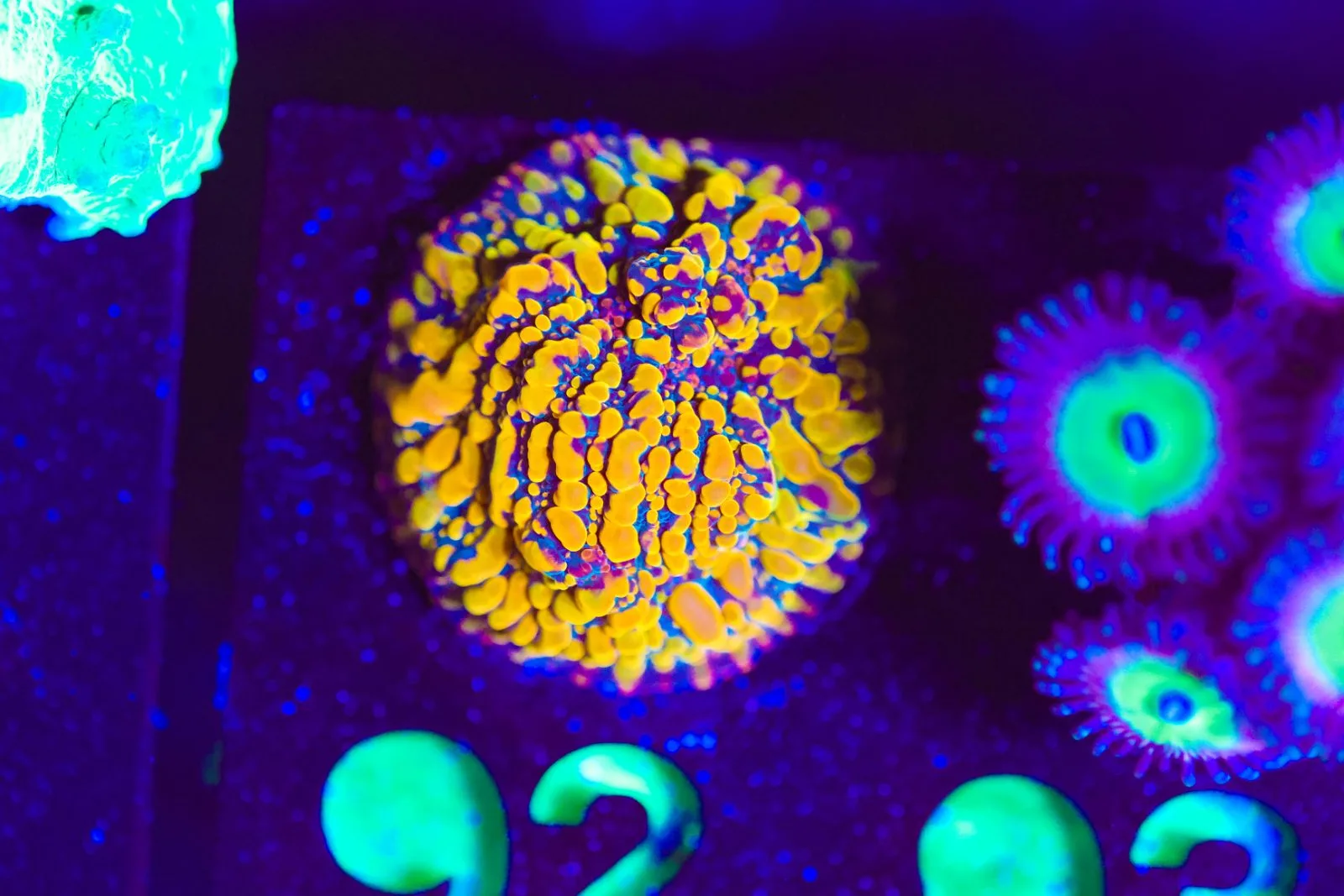
Ricordea Florida grows as a flat to slightly domed disc-shaped polyp that attaches to rock by a fleshy foot. The entire surface of the disc is covered in small, round, bubble-like tentacles packed densely together giving it its distinctive bumpy texture. It can display an extraordinary range of colours across different parts of the same polyp — the body, the inner ring around the mouth, the outer tentacles, and the skirt can all be different colours simultaneously. This is what makes rainbow varieties so spectacular and valuable. The mouth sits at the centre of the disc and a healthy Ricordea has a closed, firm-looking mouth. An open or gaping mouth can indicate stress or recent spawning. Florida Ricordea grows to about two to three inches in diameter at maturity.

An extremely rare pink Ricordea Florida — if you ever see one do not hesitate
Ease of Care
Ricordea Florida is one of the easier mushroom corals to keep and is accessible to intermediate reefers. It is not quite as bulletproof as Discosoma mushrooms but it is genuinely hardy once settled into the right spot. It thrives in lower light, does not need to be fed, and is tolerant of moderate nutrient levels. The main care requirements are appropriate low light placement, gentle flow, and stable water parameters. For the colour payoff Ricordea Florida delivers it is one of the best value corals in the hobby — an orange or multicolour rainbow Florida Ricordea in perfect health is a jaw dropping specimen that people stop and stare at.

Ricordea Florida Lighting
Ricordea Florida prefers low to moderate light. Despite being found in the shallow waters of the Florida Keys — which might suggest a preference for intense light — it is almost always found on the undersides of rocks and in shaded reef crevices where direct light intensity is significantly reduced. In a home aquarium we recommend placing Ricordea Florida in the lower third of the tank in a shaded or semi-shaded position. PAR levels of 50 to 150 are appropriate. Under too much direct intense light the polyp will deflate, colours can wash out, and the coral will stress. Under the right low to medium light conditions with strong blue actinic spectrum the colours of a healthy Florida Ricordea are absolutely extraordinary. The orange and multicolour varieties in particular produce an almost surreal fluorescence under blue LED lighting that has to be seen in person to be fully appreciated.

Proper Ricordea Florida Flow
Low to moderate indirect flow is what Ricordea Florida wants. Gentle water movement that keeps detritus from settling on the polyp surface and brings dissolved nutrients across the coral is ideal. Too much flow will lift the polyp off the rock — Ricordea Florida attaches by a relatively small foot and strong flow can detach it completely. If a detached Ricordea drifts to an unsuitable location it can die before you notice. Always place Ricordea Florida in a sheltered, low flow area and check that the foot is firmly attached before considering the placement final. If you see the edge of the disc lifting in the current the flow is too strong for that position.

Ricordea Florida Growth
Ricordea Florida grows in a way that is unique among mushroom corals. Rather than dropping pieces of its foot like Discosoma or splitting by developing a second mouth like Yuma, Florida Ricordea generates a new mouth and then physically splits away from the original — pulling apart into two separate independent polyps over several days. The process is fascinating to watch. Growth rate is slow compared to Discosoma mushrooms — Florida Ricordea is not a fast spreader and a single polyp may take a month or more between splits. This slower growth rate combined with the extraordinary colour available in some morphs is part of what makes premium Florida Ricordea frags so valuable. A single rainbow or pink Ricordea Florida is genuinely worth collecting and growing out.

A beautiful example of a wild rock full of Ricordea Florida from Cuba
Compatibility
Ricordea Florida is semi-aggressive and carries a mild sting. It should not be placed in direct contact with other coral species — the sting through direct physical contact will damage neighbouring corals over time. However it can be grouped with other Florida Ricordea to create stunning mushroom gardens — different colour morphs placed together do not sting each other and the combination of colours across a single rock is extraordinary. In our experience Ricordea Florida can also be placed adjacent to zoanthids without significant issues, and with some soft corals at a small buffer distance. Always watch for any signs of stress at contact points when placing near other species.

Colour and Variations
This deserves its own section because the colour variety in Florida Ricordea is genuinely remarkable. Orange is the most common colour and the most affordable. Green is also common. Blues and pinks are rare and command significantly higher prices. The most valuable are rainbow varieties that display three or more distinct colours simultaneously across the body, inner ring, tentacles, and skirt. Some ultra rare specimens show four or even five colours and are considered collector\\\’s pieces. The colours are produced naturally by the zooxanthellae and pigments within the coral tissue — no manipulation or special lighting tricks are involved. A pink Florida Ricordea is simply one of the most beautiful objects in the natural world and if you ever encounter one at a reasonable price do not hesitate.

Feeding Ricordea Florida
Ricordea Florida is photosynthetic and does not need to be fed to survive and grow. That said it benefits from periodic target feeding with a fine particle coral food — Fauna Marin Coral Dust is an excellent choice. The polyp will consume fine particles directed at it while flow is temporarily reduced. Feeding accelerates growth and splitting frequency and can improve colour saturation in already healthy specimens. Because the polyp sits flat on the rock target feeding is relatively straightforward. Feed once or twice a week if you want to push growth. Not necessary but rewarding.

Water Chemistry
We always recommend keeping your aquarium within natural sea water parameters — salinity of about 1.026, calcium 450ppm, alkalinity of about 8, and magnesium 1400. Ricordea Florida is a Corallimorph and builds no hard skeleton so it is tolerant of parameter fluctuations that would stress hard corals. It prefers moderate nutrient levels — elevated nitrates and phosphates are well tolerated and it actually does better with some nutrients present rather than in ultra-low-nutrient SPS-focused tanks. Stable parameters always produce the best results.
Propagation
Ricordea Florida can be fragged by cutting with a clean razor blade, ensuring each piece retains a portion of the mouth. The pieces are more delicate than Discosoma frags and take longer to heal. Place frag pieces in a very low flow area on rubble rock and give them several weeks to attach and recover. They cannot be glued. An elastic band or piece of thread can hold a piece in contact with rubble until it attaches naturally. Because Florida Ricordea grows slowly and premium morphs are valuable, fragging should be done thoughtfully. A healthy two or three polyp Florida Ricordea rock in a sought after colour morph is a genuinely prized item in the reef community.
Dipping Ricordea Florida
Always dip Ricordea Florida before adding it to your tank. A coral dip such as coral rx or two little fishies revive applied for the full recommended time is good practice. Be gentle — the tissue is delicate compared to more robust mushroom corals.

\\\\