

Pavona Coral
(Pavona decussatus)
 Placement: Middle to High
Light: Medium to High
Flow: High
Care Level: Moderate
Type: SPS
Compatibility: Semi-Aggressive
Growth Rate: Moderate
Photosynthetic: Yes
Special Care:
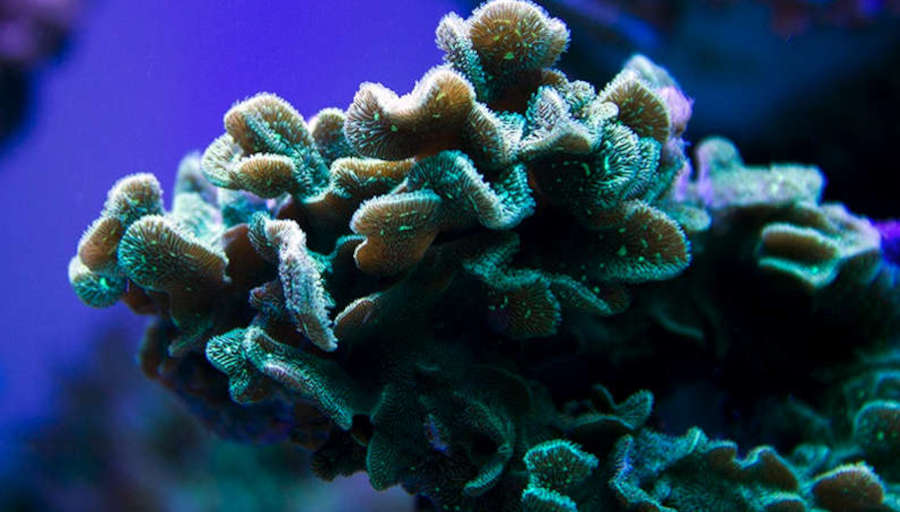
A relatively uncommon coral in the reef keeping world, the Pavona Coral is also known as the Cactus or Lettuce Coral. It is generally found in shades of green or brown and has a unique growth pattern. They grow thin plates as their branches and over time they begin to look very much like a head of lettuce. Their plates are covered in polyps that give them a fuzzy appearance. While they do not come in a wide variety of colours, they do have a fluorescent glow under the polyps and have a very unique appearance.
Pavona Coral are found in the Indian Ocean and are not generally available as aquacultured specimens. They are most common at depths of around 5 to 20 meters. They are found in a variety of habitats including upper and lower reef slopes as well as lagoons. In a home tank, they should generally be placed in the upper third of the tank where they will receive adequate levels of light and flow. As they can grow relatively quickly, initial placement is important to prevent them from crowding other corals. They require a mature tank with stable water parameters in order to thrive.
Like all SPS corals, the Pavona Coral requires moderate to high levels of both light and flow. A coral’s colour can help determine if they are receiving the right amount of light. If the Pavona Coral keeps its green colour then it is likely receiving enough light. Flow should be sufficient to keep the coral free of detritus and the polyps should visibly move in the flow. The flow should be indirect, rather than pointed directly at the coral.
This coral is photosynthetic so supplemental feeding is not required. However, if desired, they can be fed with an SPS specific coral food such as Vitalis SPS food. This will improve the growth rate and may improve colouration.
Fragging the Pavona Coral is quite simple. All that is necessary is to carefully cut a branch with coral cutters and glue the frag to a coral plug and allow it to heal.
The Pavona Coral’s unique growth pattern and relatively rarity in the hobby make it an interesting addition to a home aquarium.